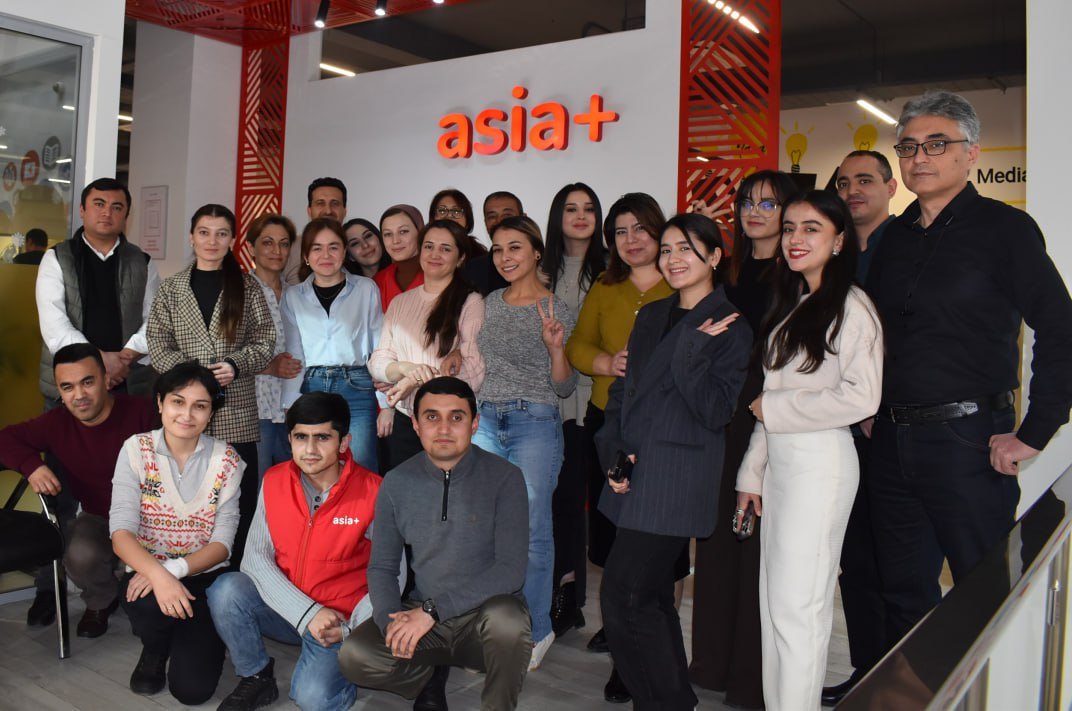
29 years ago, the first newsletter of Asia-Plus news agency was released. It marked the beginning of the media group’s activities, which over the years has become one of the leading independent media outlets in independent Tajikistan.
The first informational-analytical newsletter of Asia-Plus was published on Tuesday, April 2, 1996. It was ready a couple of days earlier, but since the end of March fell on the weekend, and Monday, April 1, was April Fool's Day, we decided to delay its release to avoid it being mistaken for an April Fools' joke. But to be serious, our first newsletter was quite relevant and content-rich, with aspirations of being a solid publication. Some of the sections alone were noteworthy: "Government," "Investments," "Defense and Security," "Privatization," "Telecommunications," "Who is Who in Tajikistan," and more.
This newsletter was published in English. Why? Because at that time, our local audience simply had no money. Just before launching, we visited local banks, private companies, Tajik newspapers, and even the government – everywhere the answer was the same: "There’s no money, the country is at war, and here you are with your newsletter!"
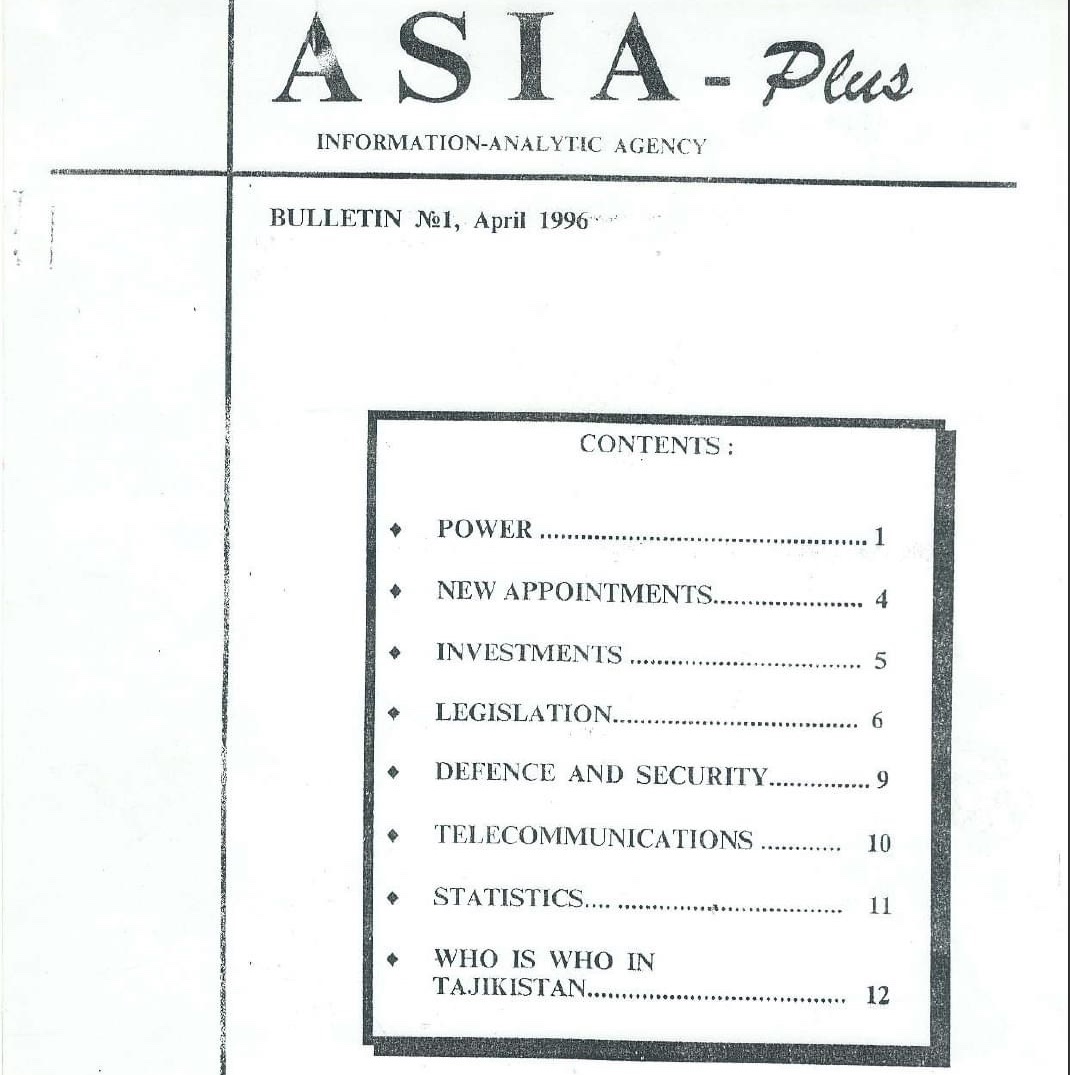
We concluded that if our fellow citizens had no money, we would focus on foreigners working in Tajikistan until better times. Especially since there were no English-language publications in the market at that time. And so, we proceeded.
“…Our country is still far from stability. Nevertheless, Tajikistan is not just about terrorist attacks or the struggle between the government and the opposition. In the country’s economic, social, and cultural life, there are complex and often contradictory processes that require close attention and expert analysis. Asia-Plus intends to cover these processes. In our view, this is especially important now, when the leadership of Tajikistan declares its intention to speed up the process of economic reforms. Because having accessible information for society is the first necessary condition for success in any endeavor. Our slogan: objective information, free from any political or group biases.”
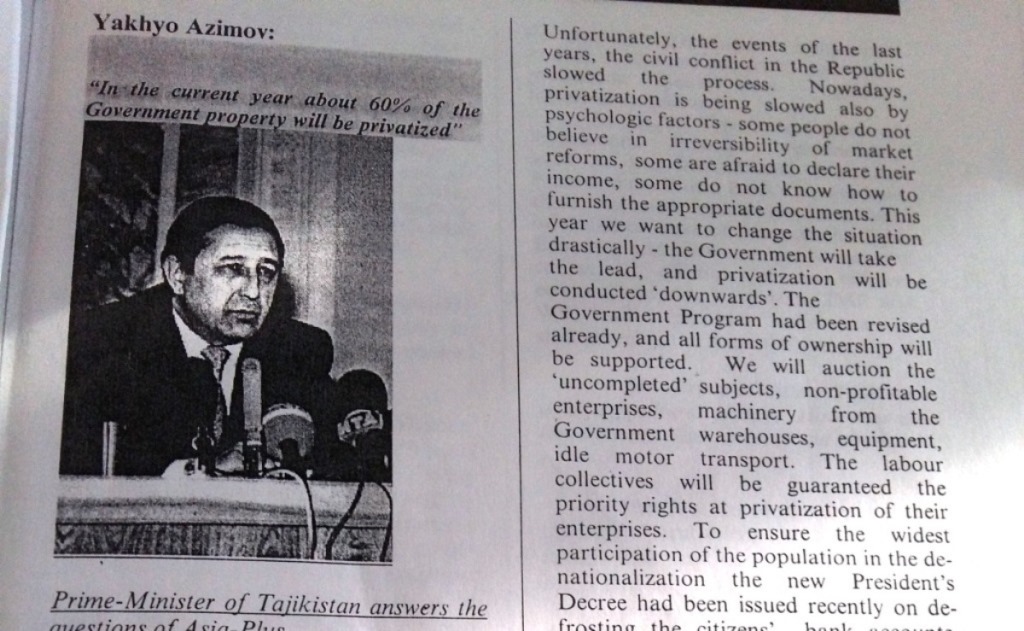
In the "Government" section, the first interview for Asia-Plus was given by the then Prime Minister Yahyo Azimov. He told our readers that in 1996, the government planned to speed up the privatization of state property, increasing it from the then 8% to 50-60%, creating additional incentives for foreign investors, and strengthening the national Tajik currency – the Tajik ruble.
Speaking about land reform, the prime minister mentioned the president's decision to allocate 50,000 hectares of land to Tajik farmers, as well as plans to abolish the cotton plan in 1996 and shift the focus of agricultural development from collective and state farms to private farming enterprises…
In the "New Appointments" section, our publication reported on new presidential decrees: on March 28, the First Deputy Prime Minister of the Tajik Government, Mahmadsaid Ubaidulloyev, was appointed Mayor of Dushanbe. His position was taken by the former mayor, Yuri Ponosov.
In the "Defense and Security" section, we covered the president’s decision to appoint Colonel Mahmoud Khudoiberdiyev as deputy commander of the Presidential Guard. The time was tense, and the appointment was a necessity. Therefore, the wording of the decree was as follows: "Considering the complex military-political situation in the republic and for the rapid stabilization…"
In our commentary on the decree, we noted that "for many observers, this appointment was quite unexpected, given the fact that Colonel M. Khudoiberdiyev was one of the active participants in the armed rebellion in January-February 1996," when his special brigade seized power in Kurgan-Tube and demanded the resignation of several key figures in the country's leadership.
We pointed out that "the president demonstrated political flexibility and realism" and managed to keep the situation under control. The final act of resolving the crisis was the president's trip to Kurgan-Tube for the celebration of Navrouz, where he managed to bring the opposing sides together at a peace table and extinguish the conflict.
In the "Telecommunications" section, the first Asia-Plus newsletter informed subscribers that in early March, Tajikistan became the 137th member of the international satellite communications organization Intelsat. The document on joining was signed in Washington by our country's Minister of Communications, Nouriddin Muhiddinov.
Another news item reported that the Ministry of Communications of Tajikistan planned to hold an international tender in August to determine the partner of the newly created structure, the Joint-Stock Company (JSC) Tajiktelecom, which would receive 49% of the company. It was noted that Tajiktelecom would be established based on the Ministry of Communications, the Post Department, TeleRadiocom, and the Committee for TV and Radio-broadcasting. The initial value of the share package was estimated at US$30 million.
The first hero of the "Who is Who" section in our newsletter was the newly appointed press secretary of the president, Zafar Saidov. Asia-Plus considered this decision one of the "most successful personnel appointments by the president."
"Energy, high professionalism, and the ability to take responsibility distinguish the 34-year-old press secretary. These qualities quickly made him a prominent figure in the political Olympus of Tajikistan," we wrote in our article.
This was the first Asia-Plus newsletter, the first brick laid the foundation for the entire media group, which later included a newspaper, FM radio station, a video studio, the VIPzone magazine, and other projects.
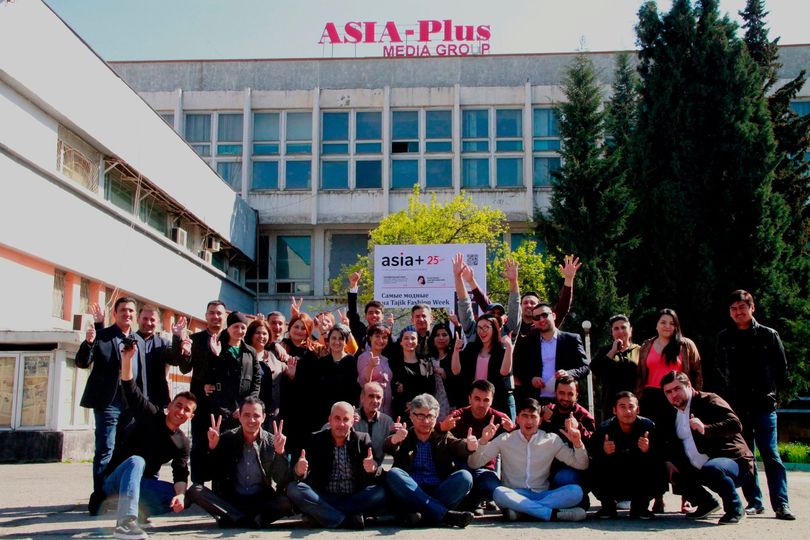
Reflecting on that newsletter from today's perspective, I believe it gave people a rather objective and truthful snapshot of that time – the early military 1996. Just as honestly, the Asia-Plus team has tried to work all these years. We know that our readers/subscribers/listeners/viewers appreciate this.
Now, Asia-Plus is preparing for its 30th anniversary, which we plan to celebrate in 2026. As usual, our team is preparing to launch new exciting projects.
Stay with us, we will try to live up to your expectations!