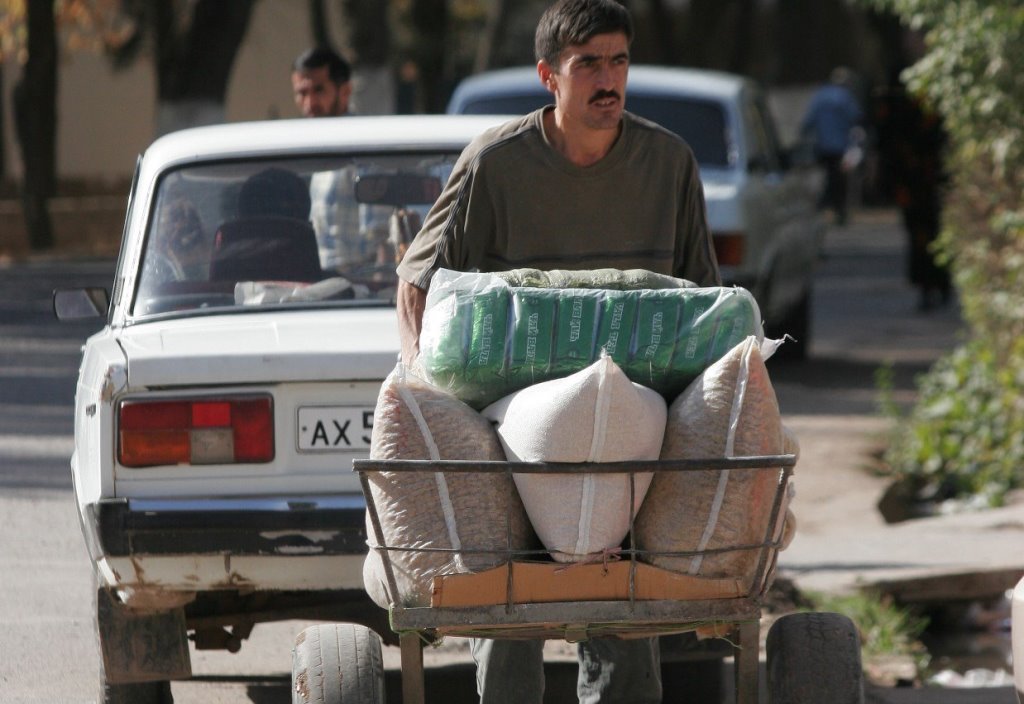
The authorities of Tajikistan have been tasked with creating 280,000 new jobs annually. How achievable is this ambitious goal?
During his latest address to both chambers of parliament in late December last year, President Emomali Rahmon instructed the government to “mobilize all its resources so that over the next five years, more than 1.4 million new jobs are created across all sectors of the national economy.” This translates to an average of 280,000 jobs per year.
According to the president, 4.1 million jobs have been created or restored in various sectors of the economy since independence. On average, about 124,200 jobs were created annually in the country during this period.
It is worth noting that earlier, the president had set more modest targets — over 100,000 new jobs per year.
What do we have?
According to the Agency for Statistics, around 1.9 million new jobs were created in the country over the past 10 years (2015–2024), averaging nearly 190,000 jobs per year.
In particular, in 2024 alone, more than 247,100 jobs were created: over 69,700 by legal entities (including restored jobs) and more than 177,400 by individuals.
Legal entities created jobs in the following sectors: education – 15,714 jobs; manufacturing industry– 12,778 jobs; construction – 8,596 jobs; agriculture – 4,738 jobs; and trade – 4,273 jobs.
About 20% of jobs created by individuals were in the form of self-employment under a patent (about 16,600 jobs), licenses (around 12,900 jobs), and dehkan farms (5,600 jobs).
However, the vast majority of jobs created by individuals last year (80.2%) fall under the category of "personal subsidiary farming and household work without official documentation." This refers to homemakers (housewives/househusbands) engaged in domestic work not registered with official employment documents.
According to the statistics, about 142,400 of such “new jobs” were created last year, making up 57.6% of the total number of jobs created in 2024 (combining both individuals and legal entities).
Meanwhile, in 2024, more than 58,000 jobs were liquidated or cut — over 32,700 by legal entities and more than 25,400 by individuals.
Inconsistencies
The statistical data on new jobs does not align with other official data, such as population growth, employment figures, or unemployment rates.
For example, the country's population increased by 1,951,200 people (22.8%) over the last 10 years. This means that, on average, the population grew by just over 195,000 people per year (2.3%), the highest rate in the post-Soviet space and among the highest in the world.
Meanwhile, as mentioned earlier, about 1.9 million new jobs were created during the same period — almost 190,000 per year on average. So, are we creating new jobs at the same fast rate as the population is growing?
The question arises: why aim to create even more jobs if the number already matches population growth — especially considering that under the current socio-economic model, most jobs are created by private individuals, and it is quite difficult for officials to influence this process directly.
Moreover, the growth rate of new jobs does not match the figures for employed population and unemployment. Over the past 10 years, the number of employed people increased by only 400,000, while the number of officially registered unemployed remained almost unchanged (51,100 in 2015 and 51,400 in 2024).
It’s about the money
Meanwhile, the majority of Tajik labor migrants leave the country not due to the lack of jobs, but because of low wages.
Officially, the average monthly salary in Tajikistan at the beginning of this year was 2,960 somonis (about $270), while the minimum wage was 800 somonis (about $73).
Obviously, with such salaries, it is extremely difficult to cover even basic necessities.
Tajikistan continues to have the lowest average salary in Central Asia — a region that itself is among the least developed in the world.
Therefore, Russia remains the primary destination for Tajik labor migrants. The number of Tajik migrants working in Russia, according to various sources including official Russian data, is estimated at between 1.5 million and 2 million people.