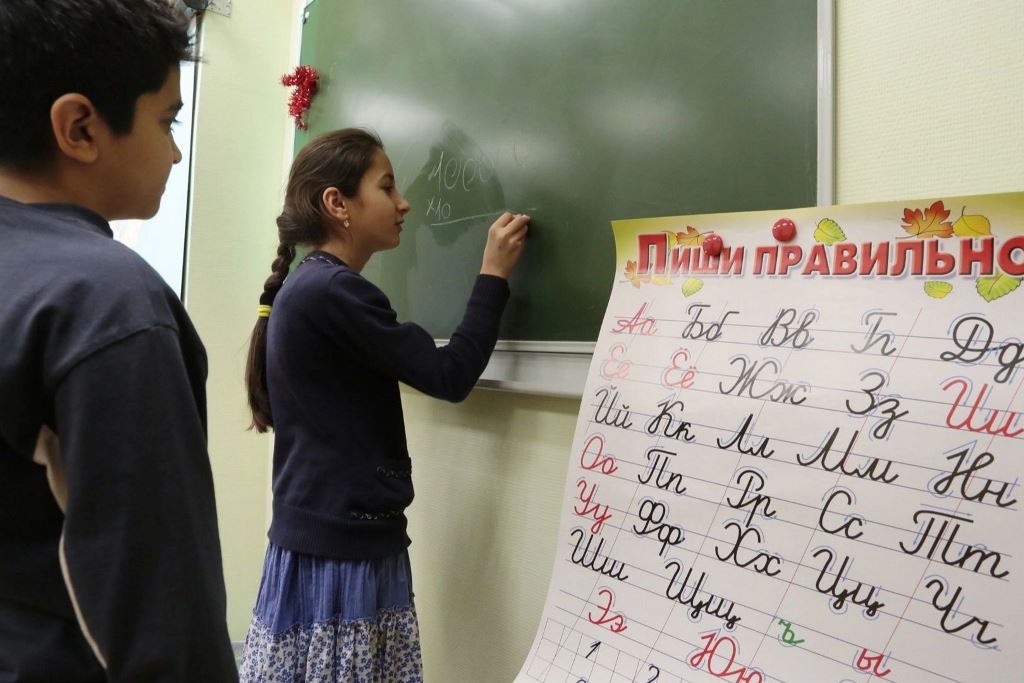
Teachers in Russian schools were advised to monitor the statements of migrant children in order to identify their possible criminal tendencies. The relevant methodological recommendations appeared on the websites of the regional ministries of education and Enlightenment of Bashkortostan, Sverdlovsk and Smolensk regions, Vedomosti noted.
The recommendations were developed by the Ministry of Education together with the Ministry of Internal Affairs and the Ministry of Education and Science and sent to executive regional bodies in the field of education, a representative of the Ministry of Education told Vedomosti. The authors are employees of the Ministry of Education of the Russian Federation and the Moscow State Psychological and Pedagogical University.
The training manual includes a checklist for identifying foreign children who are prone to illegal actions, as well as a list of preventive measures with children and their parents, including in cooperation with social services, law enforcement agencies, medical institutions and non-governmental organizations.
Teachers are instructed to "take note of phrases in students' written works that speak of disregard for historical memory, traditional Russian values and state symbols."
Teachers should also monitor the attitude of migrant children towards the content of "Talking about important things" lessons, and note "an increase in the number of conversations on political, social and religious topics, during which extreme judgments are expressed and signs of intolerance are shown."
The teacher should be alarmed by "the presence of clothing and objects with attributes and symbols of religious radicalism, extremism and criminal subcultures in a teenager", the child's interest in Internet resources containing shocking content and destructive information, for example, about terrorist activities, extremism, the cult of cruelty, violence and drugs.
In addition, teachers and psychologists should record ethnic conflicts among teenagers, bullying, offenses, and antisocial behavior on the part of foreign students.
At the same time, schools are encouraged to conduct "general events" aimed "at familiarizing them with Russian spiritual and moral values, studying the basics of legislation, culture of behavior in society, national priorities and the historical memory of the Russian Federation." The authors of the training manual include, for example, class hours on the topics "We are all different, but we are together," "Learning to live without conflict," "Friendship of peoples," etc.
Vsevolod Lukhovitsky, co-chairman of the Teacher trade union, noted that this manual is not a regulatory document, and schools can decide on their own whether to use the recommendations or not. At the same time, he believes that the wording of the title of the guidelines is not entirely correct:
"Why should we specifically set up teachers in advance for the fact that it is the children of foreign citizens who will conduct some kind of illegal conversations?"
Earlier, the State Duma approved a bill obliging regional and municipal education authorities to transfer personal data about migrant children to the Ministry of Internal Affairs. According to the deputies, such accounting should contribute to the "adaptation and integration" of migrant children into Russian society.