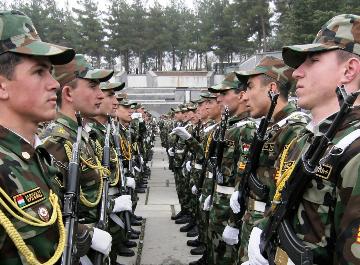
Tajikistan’s Ministry of Defense announced that 55% of the national recruitment plan for the autumn military draft was fulfilled on the very first day of the campaign, which began on October 1. Several cities and districts, including the Gorno-Badakhshan Autonomous Region (GBAO), reported full completion of their quotas by the end of day one — a result officials attribute to a rise in volunteers and increased incentives, though experts suggest other factors may be at play.
According to the ministry, the regions that achieved 100% draft fulfillment on October 1 include GBAO, the city of Nurek, and the districts of Vakhsh, Baljuvon, and Sangvor. Notably, GBAO has reportedly completed its draft target on the first day for eight consecutive years.
However, the ministry did not disclose figures for key regions such as Sughd and Khatlon provinces, the capital Dushanbe, or the districts of republican subordination, raising questions about overall transparency.
In the Rasht Valley, several districts — Sangvor, Lakhsh, Tojikobod, Nourobod, and Rasht — also reported completing their recruitment quotas on the campaign's opening day.
Unusually, some areas claimed to have fulfilled their draft quotas even before the official campaign began. For instance, the city of Bokhtar posted photos on social media on September 30, announcing it had already completed its target ahead of schedule.
On October 1, the Khatlon regional administration also reported that 11 of its cities and districts had reached 100% recruitment. These include Farkhor, Khovaling, Baljuvon, Levakant, Bokhtar, Vakhsh, Nurek, Khuroson, Danghara, Muminobod, and Dousti.
In Sughd province, the administrations of Vorukh and Chorkuh jamoats, which are subordinate to the city of Isfara, Adrasmon and Zarnisor, and several jamoats in Panjakent and Mastchoh districts also announced full completion of their draft plans on the first day.
How was the draft target fulfilled so quickly — and why are there concerns?
While officials credit the rapid draft fulfillment to an increase in volunteer enlistments, the offering of incentives, and effective public awareness campaigns, experts suggest that early mobilization and smaller recruitment targets in certain areas are the real reasons behind the quick results.
Historically, regions like GBAO and certain districts have reported full compliance on the first day of the campaign. Officials maintain this is due to better outreach, public cooperation, and a sense of civic duty. However, human rights advocates and legal experts say the reality is more complex.
Dilrabo Samadova, a lawyer from the Civil Liberties Office — an organization that defends the rights of military conscripts — has noted that preparations for the draft often begin a full month before its official launch. According to her, local military commissariats and authorities that conduct effective information campaigns tend to meet their quotas faster.
Samadova also points to legislative changes made in 2020 that now require university graduates to serve in the military before they can work in law enforcement or other security agencies. This legal shift, she says, is another key factor contributing to the early fulfillment of draft quotas in some areas.
Other experts argue that local authorities begin conscription efforts immediately after the president signs the official decree, often applying pressure on young men and their families to report for service — raising questions about whether the reported “voluntary” enlistment is truly voluntary.
The issue of military conscription remains highly sensitive in Tajikistan. Many young men continue to evade service due to concerns over poor living conditions, abuse within the ranks, hazing, and even reported deaths of conscripts. While the government insists that no forced roundups are conducted, officials acknowledge that police have the authority to forcibly bring in draft dodgers who fail to appear after receiving a summons.
The autumn draft campaign, which began on October 1, will run through the end of November. The country also offers paid one-month military training courses for those seeking an alternative path to fulfill their service obligations.