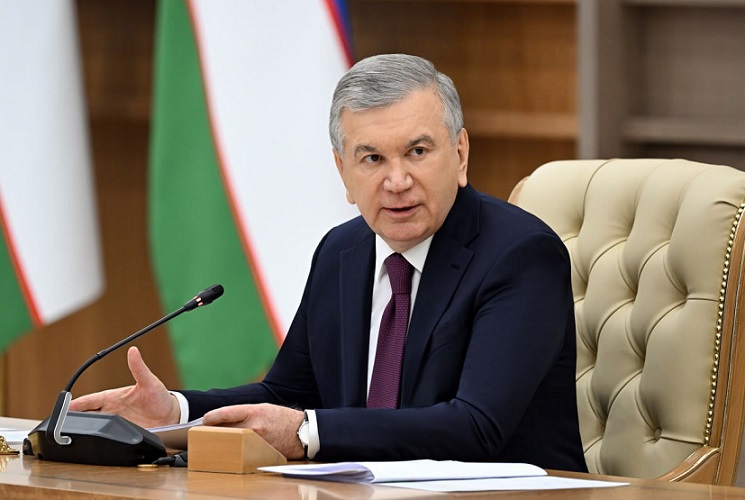
Starting January 1, 2026, Uzbekistan will roll out a pilot program to decentralize government by transferring key functions of several national ministries to local authorities. The initiative, approved by President Shavkat Mirziyoyev, aims to reshape public administration to be more efficient and results-driven.
The reform is laid out in a presidential decree titled “On Additional Measures to Fundamentally Improve the Operations of District and City Hokimiyats for the Sustainable Socio-Economic Development of Regions.” Fergana news agency says the decree was announced by the Agency for Strategic Reforms under the President.
The pilot project will involve 45 districts and cities, including 33 model territories and the entire Surkhandarya region. The objective is to create a more compact, locally focused administrative model that enhances decision-making and service delivery at the regional level.
Under the new system, branches of nine major government bodies will be integrated into local hokimiyats (administrations). These include:
· Ministry of Economy and Finance
· Ministry of Investment, Industry, and Trade
· Ministry of Agriculture
· Ministry of Employment and Poverty Reduction
· Ministry of Construction and Utilities
· Ministry of Ecology and Environmental Protection
· Ministry of Culture
· Committee on Women and Family Affairs Youth Affairs Agency
Local leaders in the pilot regions will be granted significant autonomy, including the authority to approve staffing structures, hire and dismiss employees, issue bonuses, and impose disciplinary actions within these units.
Streamlining local government: fewer deputies, clearer accountability
The presidential decree also calls for a reduction in the number of deputy hokims (governors): from eight to six in the Surkhandarya region, and from six to four in other cities and districts participating in the experiment. This move is intended to streamline local governance and increase operational efficiency.
The structure of the administrative apparatus in each experimental hokimiyat will be approved by local councils (Kengashes). While local authorities will have more flexibility, a core set of mandatory departments will remain, including divisions for performance monitoring, public information, energy management, digitalization, and others.
New financial incentives tied to performance
From 2026, regional governments will also operate under a new results-based funding model. Infrastructure and priority development projects will receive a 15% increase in funding if key performance indicators (KPIs) are fully met. However, failure to meet these targets will result in budget cuts, and the professional suitability of the region’s leadership will be reviewed.
If the pilot program proves successful, the reforms could be expanded nationwide, according to the Agency for Strategic Reforms.
The initiative reflects a broader push by the Uzbek government to modernize state administration, enhance regional self-governance, and boost accountability in public service delivery.