Tajikistan and Afghanistan's Taliban leadership have intensified diplomatic engagement in recent months in a cautious effort to de-escalate tensions and prevent further armed incidents along their shared 1,357-kilometer border.
According to RFE/RL’s Radio Azadi, recent talks have centered on expanding cooperation in energy and trade. However, analysts note that despite some progress, mutual mistrust and deep-rooted political differences continue to hinder a full normalization of relations.
“I see a continuation of the current dynamic of ‘cold cooperation,’” said Edward Lemon, a Central Asia expert at Texas A&M University. He predicts that Dushanbe and Kabul will continue engaging pragmatically in mutually beneficial areas such as joint economic projects, but a full resolution of their disputes remains unlikely.
Renewed Diplomatic Contact
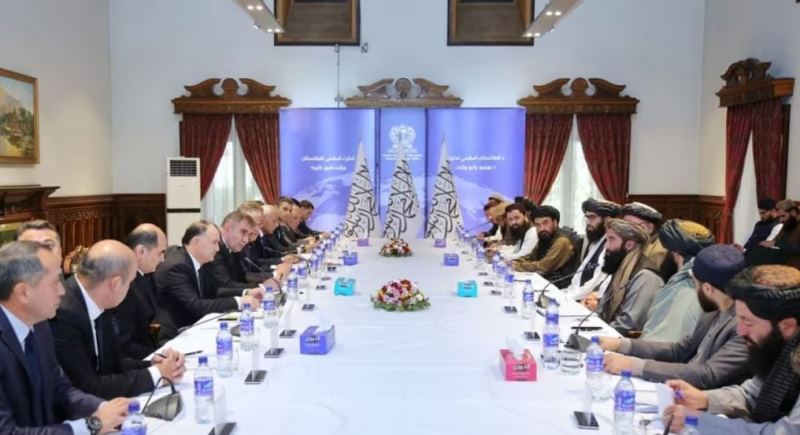
On November 15, a high-level Tajik delegation comprising diplomats and security officials visited Kabul for talks with Taliban representatives. The Taliban-run Bakhtar News Agency reported that discussions covered diplomatic ties, economic cooperation, and regional security.
This visit followed an earlier trip in late October by Mohammad Yousaf Wafa, the Taliban-appointed governor of Afghanistan’s Balkh Province, which borders Tajikistan. During his time in Dushanbe, Wafa met with General Saimumin Yatimov, head of Tajikistan's State Committee for National Security. Talks reportedly focused on preventing cross-border incursions by armed groups.
The latest diplomatic overtures occurred against a backdrop of border skirmishes. On October 25, Tajik and Taliban border forces exchanged fire near a gold mining area along the Panj River. A Taliban fighter was reportedly killed in a separate incident in August.
Disputed militants and regional security concerns
Since the Taliban’s return to power in 2021, Tajikistan and the Taliban government have repeatedly accused each other of harboring hostile armed groups.
Dushanbe remains the only neighboring capital to have openly opposed the Taliban’s takeover, branding the group a destabilizing force in the region. Tajikistan has also been accused of supporting the National Resistance Front (NRF), a mostly ethnic Tajik anti-Taliban group operating in northern Afghanistan — a charge Tajik authorities deny.
In Dushanbe, the Afghan Embassy continues to operate under the ambassador appointed by the former Afghan government, reportedly sympathetic to the NRF. Meanwhile, the Taliban controls the Afghan consulate in Khorog, capital of Tajikistan’s Gorno-Badakhshan Autonomous Region.
Tajikistan, for its part, accuses the Taliban of backing Jamaat Ansarullah — a militant group largely made up of Tajik nationals seeking to overthrow the secular government in Dushanbe. Following joint military drills between Tajikistan and Russia in 2021, the Taliban reportedly deployed hundreds of Ansarullah fighters along the border.
Afghan political analyst Obaidullah Baheer said the Taliban has demanded Tajikistan transfer control of the Afghan Embassy in Dushanbe and shut down alleged NRF offices on its soil.
Stability over recognition
Despite these points of friction, both sides are pursuing limited cooperation. Afghanistan remains heavily reliant on electricity imports from Tajikistan and Uzbekistan. Discussions are ongoing about potential new economic projects and easing visa restrictions.
Still, full diplomatic recognition of the Taliban government by Tajikistan appears unlikely.
“This is a highly sensitive domestic issue for Tajikistan,” Tajik political analyst Sherali Rezoiyon told RFE/RL’s Radio Azadi. “Handing over the Afghan Embassy in Dushanbe to the Taliban would be a controversial move.”
Lemon of Texas A&M agrees. “Tajikistan has few incentives to change its current approach,” he said. “While cooperation in specific areas may continue, formal recognition of the Taliban regime is not on the horizon.”