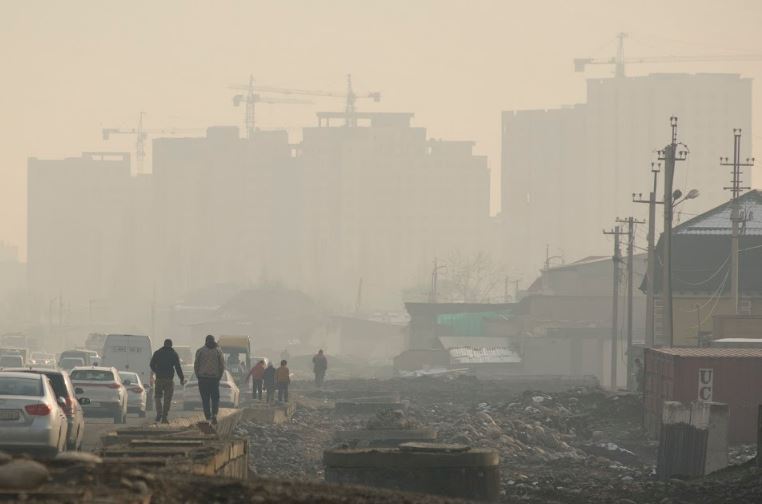
In the capital of Tajikistan, Dushanbe, deteriorating air quality is increasingly shaping where people live and how they plan their future. Dust storms, smog, high concentrations of fine particulate matter (PM2.5) have become part of daily life.
Polluted air as a factor in life and relocation
Many — especially families with children — are seriously considering relocation in search of a better environment and quality of life.
Personal stories of those who left the city — whether by moving elsewhere in the country or abroad — increasingly mention chronic coughs, allergies, other health problems. The lack of green spaces, parks, walkable paths, along with heavy traffic and dense car flow, make it difficult to maintain a healthy, comfortable lifestyle.
What the data shows
According to air quality monitoring, Dushanbe regularly records critically high levels of PM2.5 and other pollutants. IQAir classifies the city among those with hazardous air quality.
Studies in Central Asia — including Dushanbe — indicate that pollution sources are both natural (dust, dust storms, dry climate, degraded lands) and anthropogenic (vehicle emissions, burning fuel and wood for heating, emissions from energy and industrial plants).
Furthermore, over the past decades, the number of dust and sand storms in the country has increased about tenfold.
Climate, land degradation — driving migration
The environmental crises are not limited to urban pollution. Climate change, drought, land degradation have also made rural life more difficult: water scarcity, desertification, lower agricultural yield, loss of pastures — all undermine sustainable rural livelihoods.
Under such pressure, internal migration, and potentially migration abroad, becomes almost inevitable. While Tajik legislation does not yet recognize “climate migration” as a separate category, international experts treat it as part of broader environmental migration.
Experts note that it is often impossible to label migration as purely climate‑driven; rather, it’s a chain of interlinked factors — environmental degradation, health risks, economic hardship, social challenges — that drives families to relocate.
What could change the situation
To minimize the risks of migration and improve living conditions, measures are needed to reduce air pollution and adapt to climate change:
· Develop comprehensive air‑quality monitoring and public awareness;
· Reduce emissions from transport and household heating — shift to cleaner technologies;
· Promote greening, ecosystem restoration, land‑degradation control;
· Improve urban infrastructure — more green spaces, parks, pedestrian‑friendly zones;
· Adapt agriculture and water management to new climate conditions;
· Foster regional cooperation, given the transboundary nature of dust storms and air pollution.
If such steps are not taken, climate‑ or environment‑driven migration could become a serious demographic and social challenge for Tajikistan.
The issue of air quality is not limited to Dushanbe — a similar situation is unfolding in other cities across the Central Asian region.