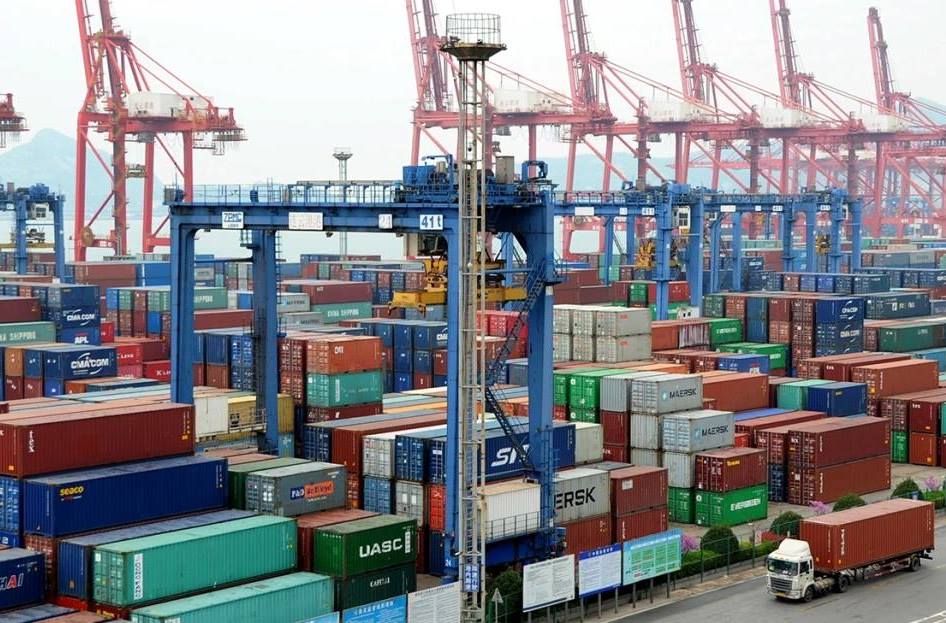
Trade between China and the five Central Asian countries exceeded $100 billion in 2025 for the first time, marking a new milestone in their economic relations, Chinese Foreign Ministry spokesperson Guo Jiakun said on January 19.
Citing customs statistics, Guo made the remarks while responding to a question at a regular press briefing. He noted that economic and trade cooperation between China and Central Asia has continued to grow despite sluggish global economic conditions and ongoing challenges facing the international trading system.
According to Guo, surpassing the $100 billion mark reflects the strong momentum of China–Central Asia cooperation and highlights the role of the China–Central Asia cooperation mechanism in promoting regional economic ties.
He added that relations between China and Central Asian countries expanded steadily throughout 2025, with progress reported in Belt and Road cooperation, institutional coordination, and people-to-people exchanges.
Guo also pointed to the Second China–Central Asia Summit as a key development, saying it opened a new phase of high-quality cooperation between the two sides.
Looking ahead, Guo said China is prepared to continue working with Central Asian partners to deepen cooperation, strengthen the China–Central Asia mechanism, and promote innovation-driven and results-oriented collaboration across various sectors, with the goal of building a closer China–Central Asia community with a shared future.
Relations between China and Central Asian countries are rapidly evolving into a strategic partnership centered on economic integration, infrastructure development, and security cooperation. Key drivers include expanded trade, Belt and Road Initiative projects, energy collaboration, and growing political engagement.
The deepening ties have been underscored by frequent high-level meetings, including the China–Central Asia summits held in 2023 and 2025, as well as the signing of multiple bilateral and multilateral agreements aimed at advancing mutual economic and security interests.
China has become the largest trading partner for several Central Asian states and is investing heavily in regional connectivity, energy projects—including nuclear energy—and technology sectors. These investments are viewed by regional governments as critical to supporting economic development, modernizing infrastructure, and enhancing energy security.
At the same time, Central Asian countries are leveraging cooperation with China to strengthen regional security, particularly in relation to stability in Afghanistan. Security dialogue and coordination have become an increasingly prominent component of China–Central Asia relations.
Analysts note, however, that as China’s influence in the region continues to grow, Central Asian governments face the challenge of balancing the benefits of economic cooperation with concerns over national sovereignty and potential economic dependence. Managing this balance is expected to remain a key issue as the partnership continues to expand.