Tajikistan reportedly alleviates power rationing introduced in rural areas

Tajikistan has reportedly alleviated power rationing introduced in rural areas. According to Barqi Tojik (Tajikistan’s national integrated power company), the power rationing was alleviated on December 9. The power rationing was reportedly alleviated due to introduction of the second line of the Dushanbe-2 combined heat and power (CHP) plant into operation. The second line of […]

Asia-Plus

Tajikistan has reportedly alleviated power rationing introduced in rural areas.

According to Barqi Tojik (Tajikistan’s national integrated power company), the power rationing was alleviated on December 9.

The power rationing was reportedly alleviated due to introduction of the second line of the Dushanbe-2 combined heat and power (CHP) plant into operation.

The second line of the Dushanbe-2 CHP plant was introduced into operation on December 8 increasing the plant’s capacity to 400 megawatt.

The Barqi Tojik press center says the supply of daily electrical power has been increased by three hours and residential customers in rural areas now have electricity ten hours per day – five hours in the morning (from 5:00 am to 10:00 am) and five hours in the evening (from 7:00 pm to 10:00 pm).

Recall, electricity rationing was introduced in rural areas of Tajikistan on November 1.

Electricity rationing has not affected Dushanbe, regional administrative centers and large cities.

The power rationing has also not affected the majority of districts of the Gorno Badakhshan Autonomous Region (GBAO).  In GBAO, Tajikistan’s only private power company, Pamir Energy Company (Pamir Energy), operates.  This company is responsible for electricity deliveries in the region and the majority of districts in Gorno Badakhshan now have regular power supply.

Measures rationing electricity supplies are usually introduced in all regions except Dushanbe and seek to curb the country's rising electricity consumption.  The rationing is introduced in October or November and lasts through March or April next year.  The rationing results in the supply of daily electrical power being reduced to 10 or 8 hours.  In addition to curbing rising consumption, the move also stems from a decline in the water level in the country's reservoirs powering the main hydroelectric power plants.

Join us on social media!

Article translations:

Related Article

Оби зулол
Оби зулол

Most Read

Акика Алиф

Recent Articles

In Tajikistan, a unique surgery was performed for the first time on a child with an extremely rare pathology

Tajik and Russian surgeons successfully performed the most complex reconstruction of the bladder and abdominal wall for a child with recurrent exstrophy.

The ministry of health states that hantavirus does not threaten Tajikistan

Cases of infection with this virus were detected on board the cruise liner Hondius near the Canary Islands.

Tajikistan lags behind other Central Asian countries in number of chain hotels – study

The Republic remains a niche market with a limited number of quality hotels.

Climate risks threaten food security in Central Asia – FAO

Land degradation reduces agricultural productivity. The loss of biodiversity weakens the ecosystems that farmers, livestock breeders, and rural communities depend on.

Potential or illusion? Why the world overlooks Tajikistan’s mineral wealth

The republic may indeed possess significant reserves of rare metals, but there is a catch...

The case of ousted Kyrgyz security boss classified and moves to court

The former head of the GKNB is charged with violent seizure of power and abuse of official position.

Trump states that Iran’s nuclear program is a higher priority than U.S. citizens’ economic issues

Fluctuations in energy prices led to record inflation in the United States in April, the highest in the past three years.

Foot-and-mouth disease, plague, and flu: Central Asia threatened by transboundary animal diseases

FAO urges Central Asian countries to strengthen coordination and epidemiological surveillance.

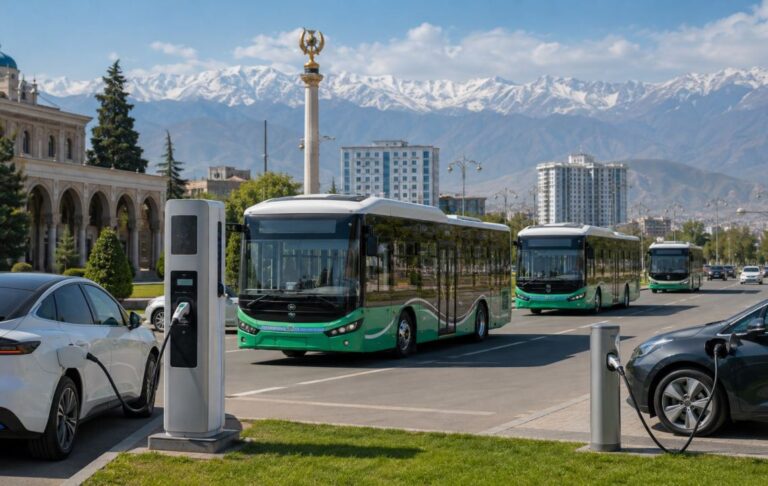
Tajikistan approves the second phase of the Electric Transport Development Program; $95 million will be allocated for its implementation.

At this stage, the authorities are focusing on charging infrastructure, services for electric vehicles, and the expansion of the electric bus fleet.

Tajikistan and Kazakhstan to sign roadmap for cooperation in the agrarian sector

The parties are interested in expanding investment cooperation and establishing joint ventures.