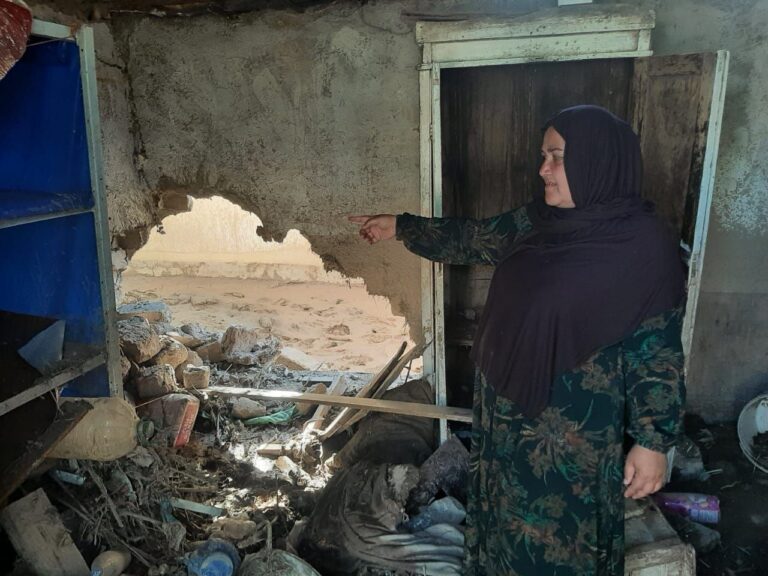
For women in Tajikistan, that turn of events often brings shame and penury. In-laws regularly turf out the wives of their sons from home, leaving them with nothing.
As Tajik men migrate for work overseas, a significant proportion abandon their wives and children.
Due to the high rates of unemployment in Tajikistan, about one million Tajik citizens—a third of men aged 20–39 years—have migrated and live in the Russian Federation. A 2009 study by the International Organization for Migrants (IOM) found that between 230,880 and 288,600 Tajik women and families were abandoned by migrant workers and living at or below the poverty level
Small-scale entrepreneurship is a lifeline for such women.
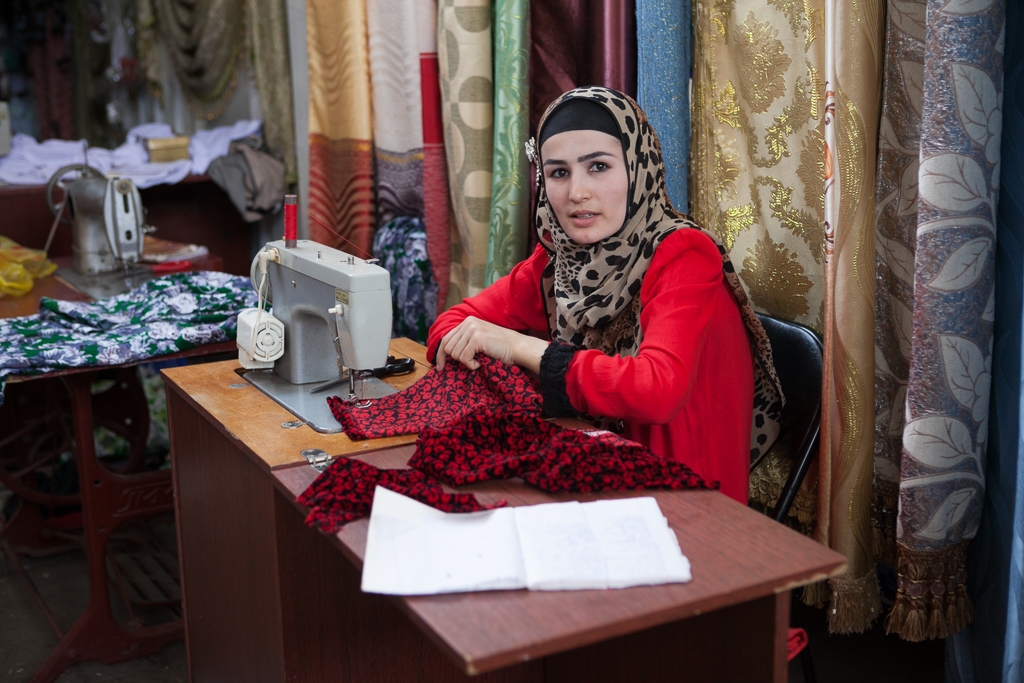
Eurasianet says Sitora, a 37-year-old woman from the Tajik southern district of Qumsangir (currently Jaihun), set up a sewing shop after her husband called from Russia to say he was leaving her.
By means of a simple verbal statement he reportedly made a declaration of talaq, a Sunni Muslim marriage annulment rite practiced by many long-term Tajik labor expatriates desiring to move on from families back home, and that was that.
Like many other girls from her village, Sitora, who spoke to Eurasianet on condition of partial anonymity, got married at the age of 18. She did not know her husband-to-be beforehand. During the matchmaking procedures, she was told that her prospective spouse was a labor migrant and that he would leave for Russia right after the wedding.
“All the men in our area go to Russia for earnings, and my husband was one of the ‘Russians.’ I found nothing strange in that,” Sitora said.
Sure enough, her husband left after two months and only returned periodically. Over the years, she had several children with him.
Migration is a heavily male-dominated affair. Of the almost 531,000 Tajik nationals that the government estimates went to Russia for work in 2019, around 454,000 were men. Russia’s own overall estimates are even greater. Russian officials believe 1.2 million Tajiks live in the country.
Five years into her marriage, which was a couple of years back, Sitora began to hear gossip around the village that her husband had taken another wife in Russia. The call to unilaterally announce their divorce came shortly afterward. They sent her away from her husband’s home to her mother.
The sense of disgrace is no less crushing than the financial hardship. In Tajikistan, family breakups are typically, without consideration for the context or facts, blamed on the woman. And for a woman to live alone after a divorce can be particularly scandalous.
So, it was a brave step when Sitora scrabbled together the money to rent her own living space and to set up the sewing shop. Now, she is employing another two women as seamstresses.
According to official government data, there were more than 295,000 registered individual entrepreneurs in Tajikistan in 2019. Official figures provide no breakdown on how the genders are represented in that total, but there is strong anecdotal evidence that the proportion of women doing business, in catering, agriculture, tourism and textiles, is ever rising.
As Firouza Nasyrova, the head of a business consulting company, told Eurasianet, the reasons women go into business have evolved over the years. In the 1990s, it was to provide for their families’ basic needs. In the 2000s, as the flow of external migration began in earnest, it increasingly happened because they had been abandoned by their husbands. And it is not like there are many decent jobs going around.
Nongovernmental groups address the situation by serving as business incubators and giving budding female entrepreneurs a leg-up.
The National Association of Businesswomen of Tajikistan began as a resource for providing business education to women going through hard times. These days, one of their initiatives is the annual Farah award for success in business. The competition is only open to women.
Nasyrova’s consulting company is setting up online courses for aspiring businesswomen. But she says that government support, including tax breaks, will be needed to advance the fortunes of female entrepreneurship.