Being in line with the strategic goal of the Republic of Tajikistan in ensuring energy security and development of internal and external energy infrastructure (electrical networks and substations) as one of its top priorities in the National Development Strategy 2030, JICA supported the construction and rehabilitation of two substations in Dushanbe, which are directly contributing to achieving of energy sector strategic goals, according to JICA Tajikistan Office.
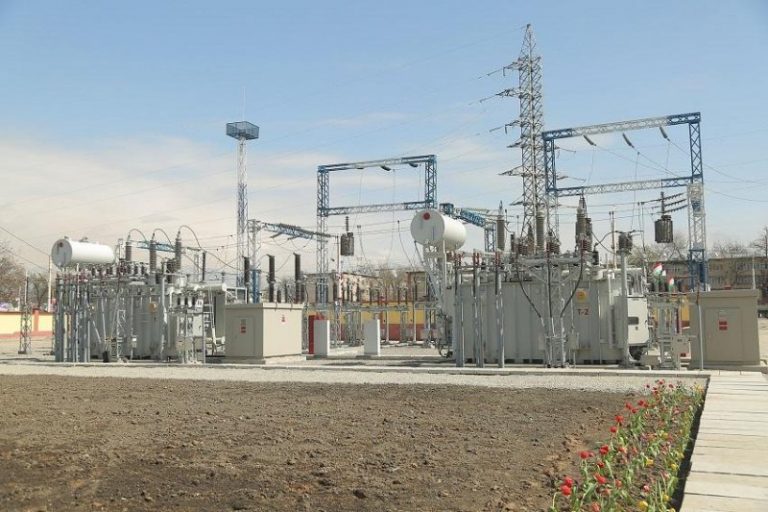
On March 17, 2021 at the newly rehabilitated “Sanoat” substation, the Official Opening Ceremony of substations provided to OJSC “Shabakahoi Intiqoli Barq” under the JICA Grant Aid “The Project for Improvement of Substations in Dushanbe” was held.
The official ceremony was attended by Dushanbe Mayor Rustami Emomali, the Deputy Prime Minister of Tajikistan Usmonali Usmonzoda, the Minister of the Energy and Water Recourses of the Republic of Tajikistan Daler Juma, Japan’s Ambassador to Tajikistan Takayuki Miyashita, the Chief Representative of JICA Tajikistan Office Muneo Takasaka and others. The Official Ceremony was successfully held although it had to be postponed due to COVID-19 pandemic.
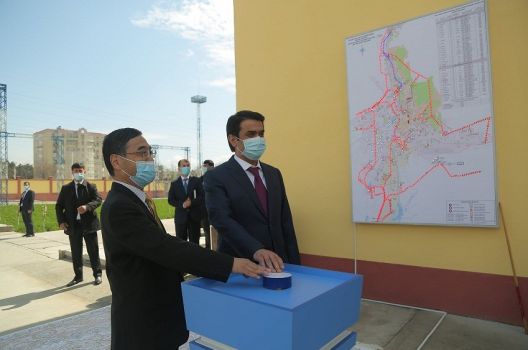
Since launching of the Project in 2018, a new substation “Poytakht” (landmark: “Amphitheater”, 110/10kV) has been built in Dusanbe’s Ismoili Somoni district, and the second substation “Sanoat” located in Dushanbe’s Sino district (landmark: Farovon market, 110/10kV) has been rehabilitated. A grant agreement on this project was signed on June 30, 2017 between Tajikistan and JICA in the amount of 2.190 billion Japanese yen (about 20 million US dollars). This project was implemented by OJSC “Shabakahoi Intiqoli Barq” and the Japanese company Nishizawa Ltd., under the leadership of the Ministry of Energy and Water Resources of Tajikistan.
Construction of the distribution substations with cutting-edge technologies will improve the issues of supply reliability, such as frequent power outages caused by substation equipment’s overload and abrupt power outages raised from the failure of aged equipment.
During the opening remarks at the Ceremony, Dushanbe Mayor Rustami Emomali highlighted contribution of the Government of Japan and JICA to the development of the energy infrastructure of the Tajik capital. The Deputy Prime Minister Usmonali Usmonzoda stressed out the importance of substations to reduce the electricity distribution losses in the city. The Minister of Energy of Water Recourses of Tajikistan Juma Daler also thanked the Embassy of Japan and JICA for their cooperation and emphasized that both substations will be accurately used and maintained.
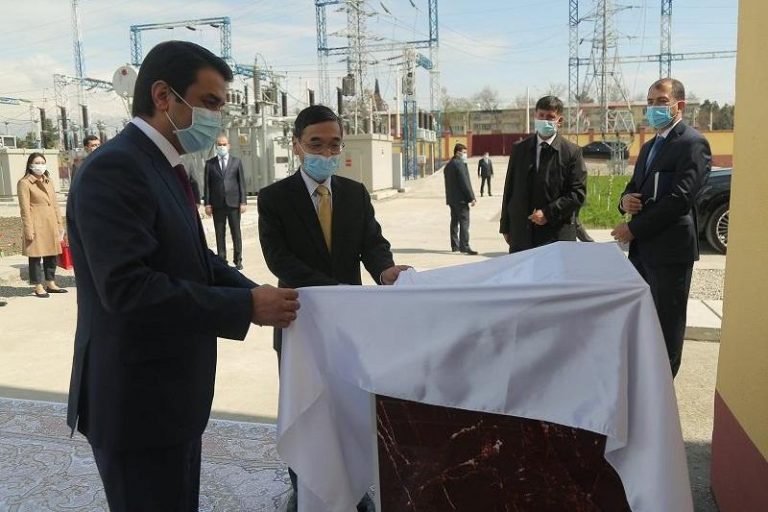
Ambassador Takayuki Miyashita noted that the construction of new substations is important for the stability of energy supply to the city's population, especially in the areas with high power demand density. Mr. Muneo Takasaka, highlighted that the project is the first for JICA in the energy sector of Tajikistan and JICA hopes to continue supporting the development of the energy sector of the Republic in close collaboration with the Government of Japan.
JICA began its technical cooperation with Tajikistan in 1993 by inviting Tajik officials to gain knowledge and experience on governance and macroeconomics development. As of March 2020, a total number of participants to JICA’s Knowledge Co-Creation Programs, formerly called the Training Programs, has exceeded 2380 people. JICA Office was established in Tajikistan in 2006 and since then various Grant Financial Assistance and Technical Cooperation projects have been implemented more dynamically, aiming at improving living standard of Tajik people for the sectors such as agriculture and rural development, water supply, health, transport, energy, capacity building as well as SME promotion. JICA’s cumulative investment portfolio in Tajikistan in all sectors comprises 44 projects amounting to more than 418.5 million USD (94.66 million USD for Technical Cooperation and 324 million USD for Grant Assistance), including 14 ongoing projects.