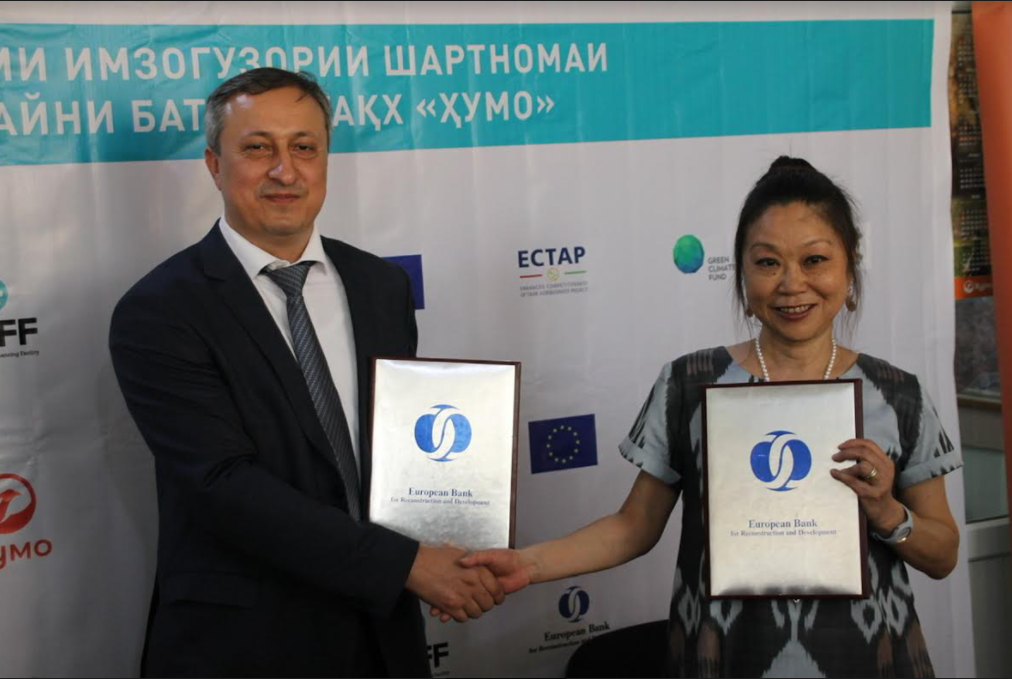
The European Bank for Reconstruction and Development (EBRD) and the Green Climate Fund (GCF) continue supporting small private companies in Tajikistan, which are willing to invest in green technology solutions by offering new funds to the one of the country’s leading microlenders, MDO HUMO.
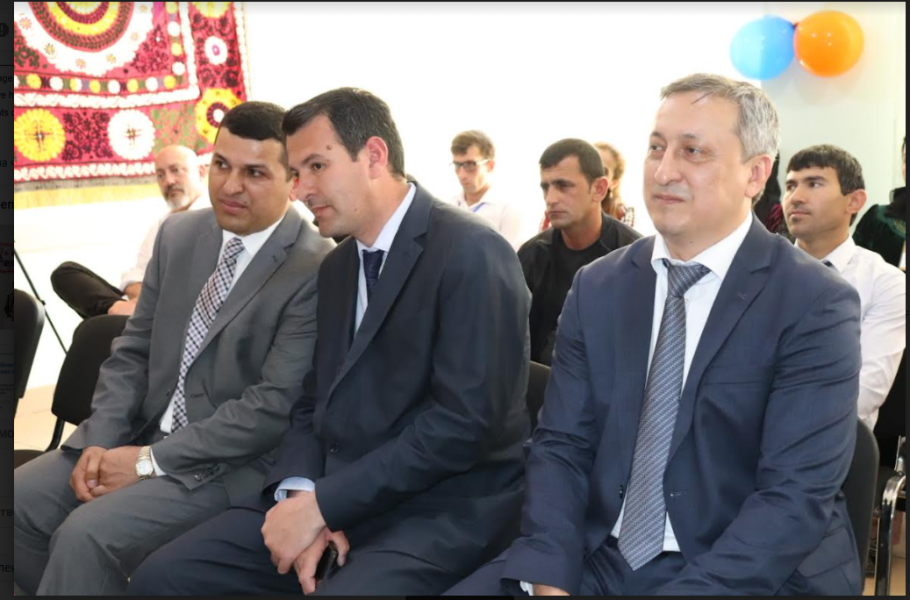
According to the EBRD Dushanbe Resident Office, the official signing ceremony was held in Kulob City on April 5 with participation of Kulob Deputy Mayor Orzu Homidiyon.
A new financial package of US$4 million will be provided by the EBRD and the GCF under the Bank’s Green Economy Financing Facility (GEFF). It will consist of an EBRD loan of US$3 million, which will be disbursed in local currency, and concessional financing of US$ 1 million by the GCF.
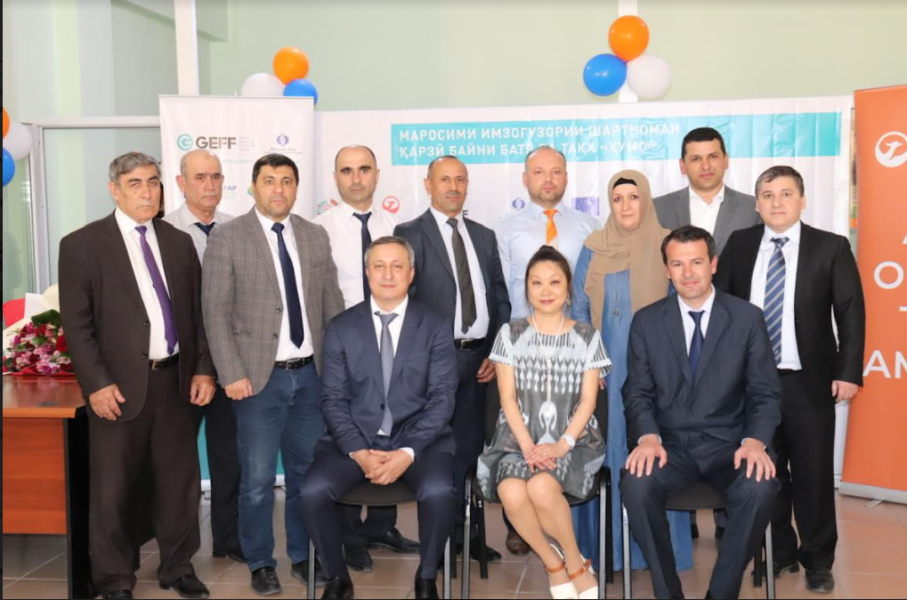
HUMO was the first financial institution in Tajikistan to join GEFF back in 2019 and successfully utilized the first loan. The new funds will help increase access to green technologies for local households and small and medium-sized enterprises (SMEs).
The project is supported by technical assistance funded by the GCF and the Government of Korea, and incentive payments from the EU’s Enhanced Competitiveness of Tajik Agribusiness Program (ECTAP), which promotes competitiveness in the agribusiness sector.
HUMO is a subsidiary of Gojo & Company Inc., a Tokyo-based investment holding company promoting greater financial inclusion in developing countries. It is the second largest microfinance institution in Tajikistan serving mainly small and microbusinesses in retail and agribusiness sectors.
The GEFF program is part of the Bank’s Green Economy Transition (GET) approach and the EBRD is planning to scale up its climate and environmental finance and make more than 50 percent of its annual investment green by 2025.
Through GEFF, the EBRD supports businesses and households investing in green technologies. Since the launch of this financing instrument, and with the support of donors, the EBRD has distributed over €5 billion via more than 170 participating financial institutions to support more than 218,000 green investments across 28 countries. The program helps avoid almost 9.5 million tons of CO2 emissions per year.
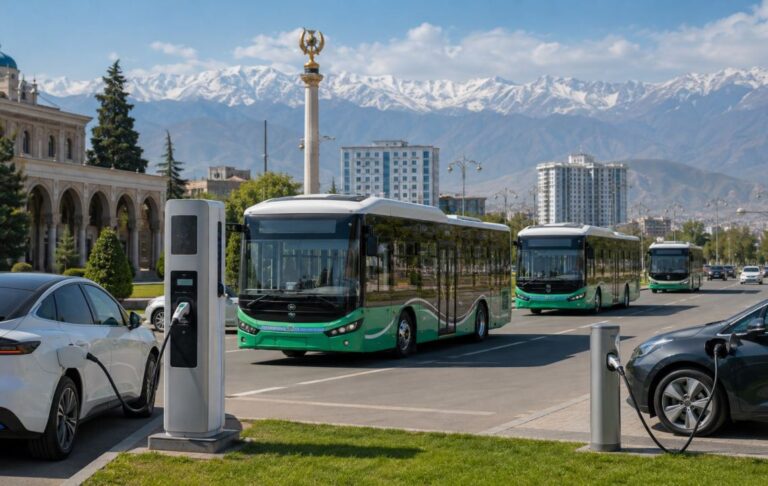
Green technology refers to a type of technology that is considered environmentally friendly based on its production process or its supply chain. Green technology can also refer to clean energy production, the use of alternative fuels, and technologies that are less harmful to the environment than fossil fuels.
Although the market for green technology is relatively young, it has garnered a significant amount of investor interest due to increasing awareness about the impacts of climate change and the depletion of natural resources.
To date, the European Bank for Reconstruction and Development has invested €854 million through 148 projects in Tajikistan’s economy.