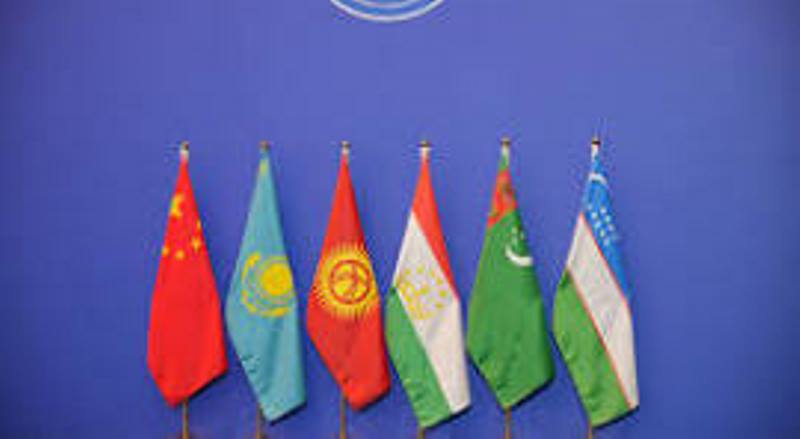
Radio Liberty reports that while Chinese President Xi Jinping sent messages of resolve aimed at the West during the September 3 parade and days earlier at a summit of the Shanghai Cooperation Organization (SCO), Chinese officials and businesses inked billions of dollars' worth of new infrastructure and technology deals with Central Asian governments and companies while announcing new agreements to lessen the barrier for Chinese businesses to operate across the region.
"China is now completely integrated into the region. There is no denying its overwhelming presence in Central Asia," Frank Maracchione, an expert on China's engagement with Central Asia at the University of Kent, told RFE/RL in an interview.
This reality is reportedly most apparent in Central Asia's two biggest economies: Kazakhstan and Uzbekistan. At the SCO summit and at events on the sidelines around the massive military parade in Beijing, Kazakh President Kassym-Jomart Tokayev signed more than 70 new commercial deals worth US$15 billion that included investments in oil and gas projects, petrochemicals, transport corridors, logistics hubs, and digital technologies.
Uzbek President Shavkat Mirziyoyev reportedly also left China with new investments in construction, nuclear energy, higher education, and the automotive industry, as well as formal backing at the SCO for a long-discussed multibillion-dollar railway project connecting Uzbekistan to China through Kyrgyzstan that has been championed by Tashkent.
"It's no longer just about Beijing's relationship with Central Asian governments or only big infrastructure projects," Maracchione said. "A lot of people across the region work for Chinese companies, buy Chinese products, and are learning Chinese. China is a part of everyday life now."
That growing footprint is reportedly seen in data from Uzbekistan's national statistics agency, which showed the number of Chinese companies operating in the country overtook the number of Russian firms in 2024 and continues to grow. In 2025, the figures show that more than 1,000 new Chinese companies launched in the country compared to the previous year.
China represents a vital source of capital for Central Asia. Kazakhstan, one of the region's most dynamic economies, also views it as a model for its own development priorities as it eyes diversifying away from the oil and gas that have dominated its economy since it became independent in 1991.
Astana and other governments are looking for Chinese expertise and investment in renewable energy, a sector where China has become a world leader. Among the recent deals signed in Beijing were agreements to procure wind turbines, build electric vehicles, and set up steel factories with Chinese partners.
Nuclear energy cooperation, a sector where China is looking to expand globally, also became a focal point, with Mirziyoyev meeting with Shen Yanfeng, chairman of China's National Nuclear Corporation (CNNC), on September 2. Their talks focused on expanding cooperation and came as Uzbek Mining and Geology Minister Bobir Islamov announced 13 new mining-related deals, including for uranium, with a reported value of $5 billion.
CNNC was also awarded the contract to build Kazakhstan's second nuclear power plant. In July, Kazakh Deputy Prime Minister Roman Sklyar announced the Chinese company would build Kazakhstan's third nuclear power plant.
RFE/RL notes that for Temur Umarov, a fellow at the Carnegie Russia Eurasia Center in Berlin, the flurry of activity in China highlights the steady and predictable engagement Beijing has followed with Central Asia in recent years that has seen it become an increasingly important economic, and now political, player.
And while governments are eager to court investment and welcome new Chinese companies, they are also wary about overdependence on China.
"All Central Asian countries have their strategy more or less stabilized and are not really trying to change anything in the relationship with China," he told RFE/RL. "[They're] continuing with their good old multivector foreign policy."
Bilateral trade between Central Asia and China, its largest individual trade partner, has been rising steadily in recent years, hitting a record high of US$94.8 billion in 2024.