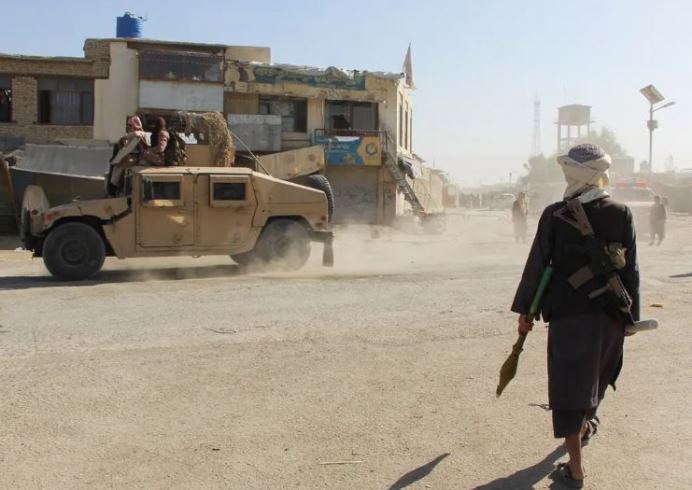
Pakistan launched airstrikes on the Afghan cities of Kabul and Kandahar early Friday morning, marking an escalation in cross-border tensions, according to Pakistani government officials cited by the BBC. In response, the Afghan Taliban initiated renewed attacks against Pakistani military positions along the shared border, a Taliban spokesperson confirmed on X, although the post has since been deleted.
Pakistani authorities described their actions as "counter strikes" in retaliation for what they called "unprovoked Afghan attacks." However, the Taliban asserted that the strikes were in response to earlier Pakistani operations, escalating a cycle of violence between the two countries. The two sides had previously agreed to a fragile ceasefire in October following deadly cross-border clashes, but recent hostilities suggest that peace remains elusive.
Residents in Kabul reported hearing loud explosions throughout the city on Friday morning, as AFP noted. Both Pakistan and Afghanistan claim to have inflicted significant losses on one another in the latest wave of fighting. In Pakistan's border regions, locals also reported hearing explosions and were advised to seek safety.
Pakistan’s government announced the deaths of two soldiers following an Afghan Taliban operation targeting military positions late Thursday. Three additional Pakistani soldiers were injured as Pakistani forces retaliated against the "unprovoked fire," according to Information Minister Attaullah Tarar.
The Taliban, on the other hand, stated that its "large-scale operation" was in direct response to strikes earlier in the week, which they claimed resulted in at least 18 casualties. Pakistan, however, insists that it was targeting alleged militant camps and hideouts.
Mawlawi Wahidullah Mohammadi, a military spokesperson for the Taliban, confirmed that the retaliatory operation began at approximately 20:00 local time (15:30 GMT) on Thursday. Taliban spokesperson Zabihullah Mujahid later claimed that the offensive had resulted in the deaths of numerous Pakistani soldiers and the capture of several military posts.
A spokesman for Pakistan’s Prime Minister Shehbaz Sharif denied these claims, stating that no Pakistani military posts had been lost. "All aggression will receive an immediate and effective response," he added.
Pakistan's government accused the Taliban of making a "miscalculation" by launching unprovoked attacks on multiple locations along the border in Pakistan's Khyber Pakhtunkhwa province, which is home to several military posts. In response, Pakistan’s security forces mounted a rapid counteroffensive.
Pakistan’s Defense Minister, Khawaja Asif, has now labeled the situation as an "open war" between Pakistan and the Afghan Taliban, as fighting continues along the border and explosions are reported in Kabul, Al-Jazeera reports, noting that Prime Minister Sharif stated that, although Pakistan has “always sought peace,” the country’s armed forces will now “firmly confront any aggression."
The border dispute between Pakistan and Afghanistan is longstanding, with the two countries sharing a 2,574-kilometer mountainous frontier. Both nations have struggled to maintain peace along this border, which has become a flashpoint for violence in recent years.
This escalation follows a brief period of relative calm after the ceasefire agreement in October 2024, but with tensions once again running high, the fragile peace between the two nations appears increasingly unstable.