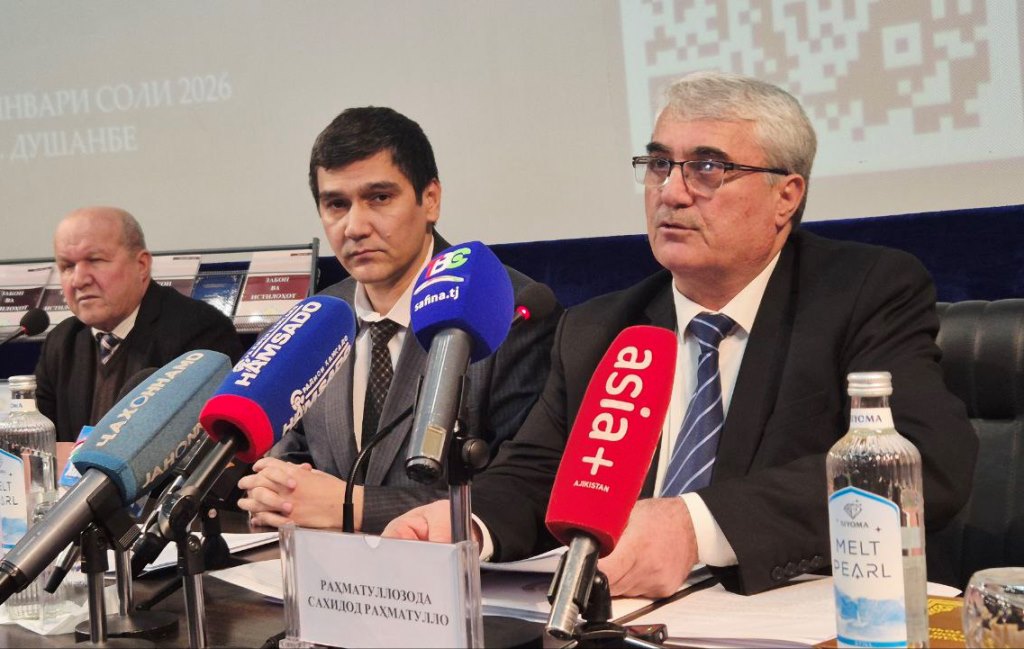
Sahidod Rahmatullozoda, Chairman of the Committee on Language and Terminology, reported on the results of the first phase of the “State Language Development Program for 2020-2030” and discussed the measures the Committee has taken from 2020 to 2025 during the parliamentary hearings on April 23.
The “State Language Development Program for 2020-2030” consists of two phases, the first of which covers the period until 2025.
According to Sarvar Kurboniyon, Deputy Minister of Finance of the country, a total of 5 million somoni is allocated for the implementation of this program, of which 3.1 million is from the state budget, and 1.9 million somoni is from grants and other sources, which are “transferred to the accounts of ministries and agencies responsible for implementing the program.”
He added that by 2025, 1.1 million somoni has already been allocated from the state budget for the implementation of the program.
However, it is not reported how much funding was received from other sources. It is also not specified what actions were funded and how much money was spent on their execution.
What has been done under the program?
Sahidod Rahmatullozoda, Chairman of the Committee on Language and Terminology, reported on the execution of several points of the program during the parliamentary hearings. According to him, the following measures were implemented:
— “Rules of Tajik Language Orthography and Punctuation” were adopted;
— Amendments and additions were made to the “Law on the State Language of Tajikistan”;
— “Tajik Language Orthographic Dictionary” was published;
— “List of Tajik National Names” was published;
— The “Spelling and Methods of Correct Writing” program was developed;
— “Mozilla Firefox” was adapted to the Tajik language;
— A National Translation Center was established under the Committee;
— Tajik sign language was officially recognized;
— A Russian-Tajik dictionary and other lexicographic publications were developed.
What has not been completed?
Barno Saidvalizoda, Chairwoman of the Parliamentary Committee on Science, Education, Culture, and Youth Policy, expressed concern about the overall level of program implementation.
Citing data from the country’s Accounts Chamber, she stated that only 35.2% of the program plan was completed by the end of 2025, which “raises concern.”
Despite mentioning some achievements, Saidvalizoda noted that at the very first stage “a number of serious problems emerged.” In particular, in the report presented by the Committee, most data is general in nature, and specific results of the execution of points are not presented.
According to Barno Saidvalizoda, one of the unfulfilled points is the publication of guidelines for slogans, banners, and advertising.
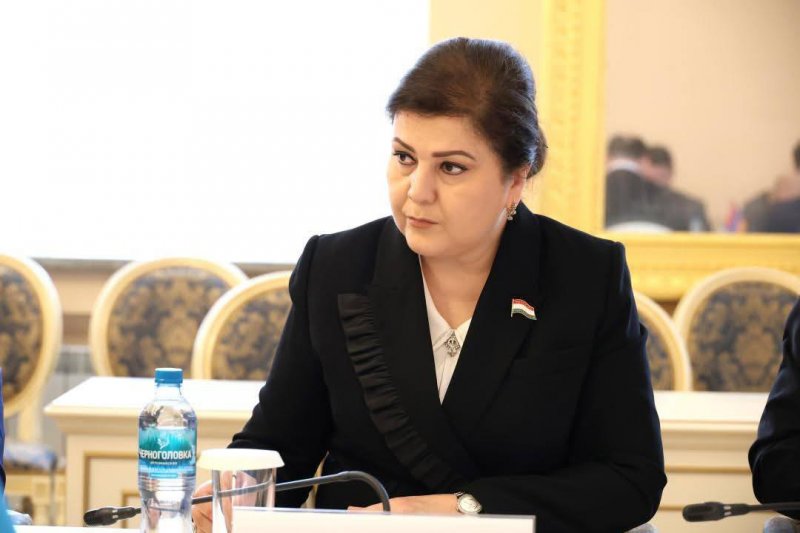
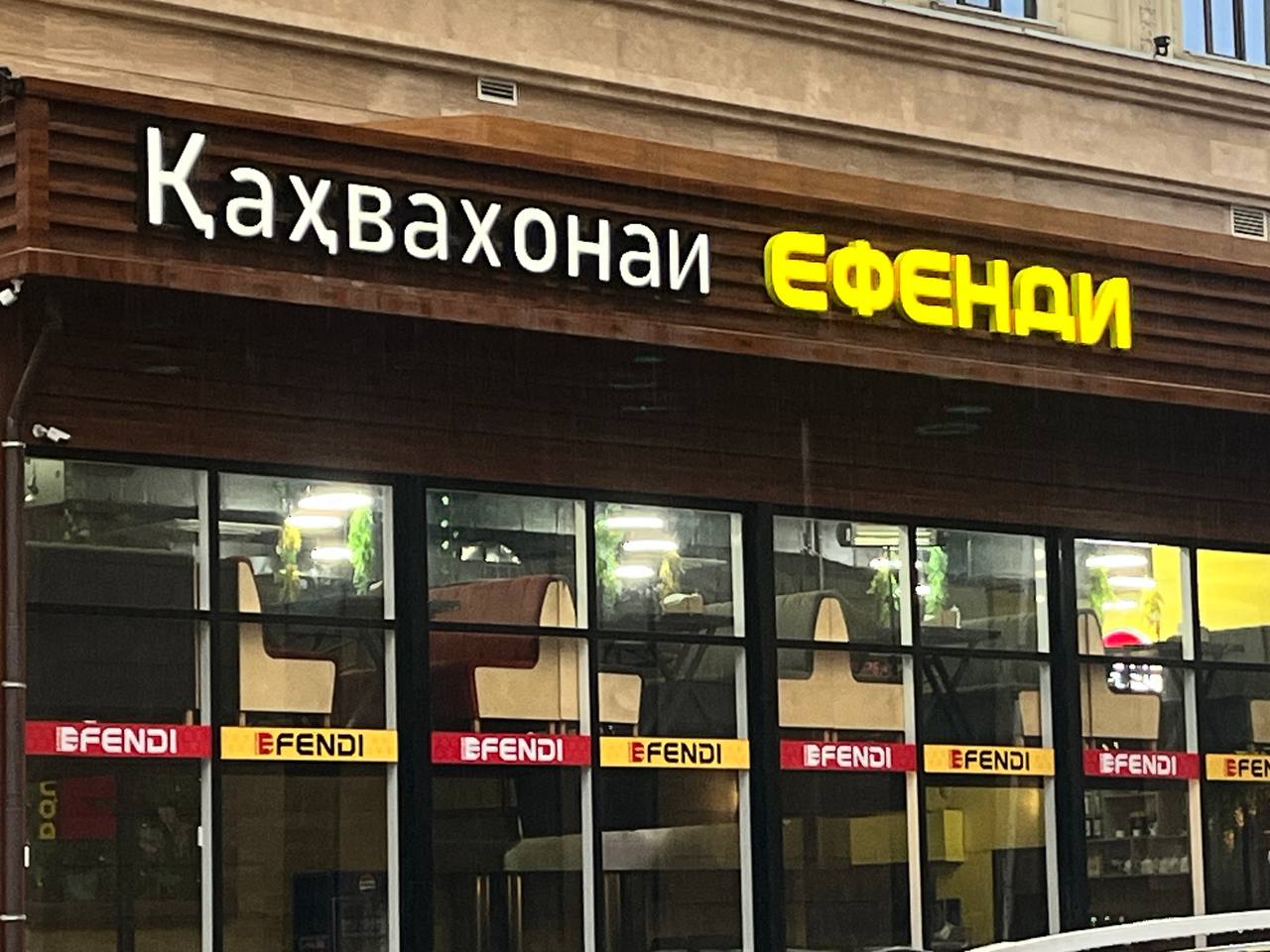
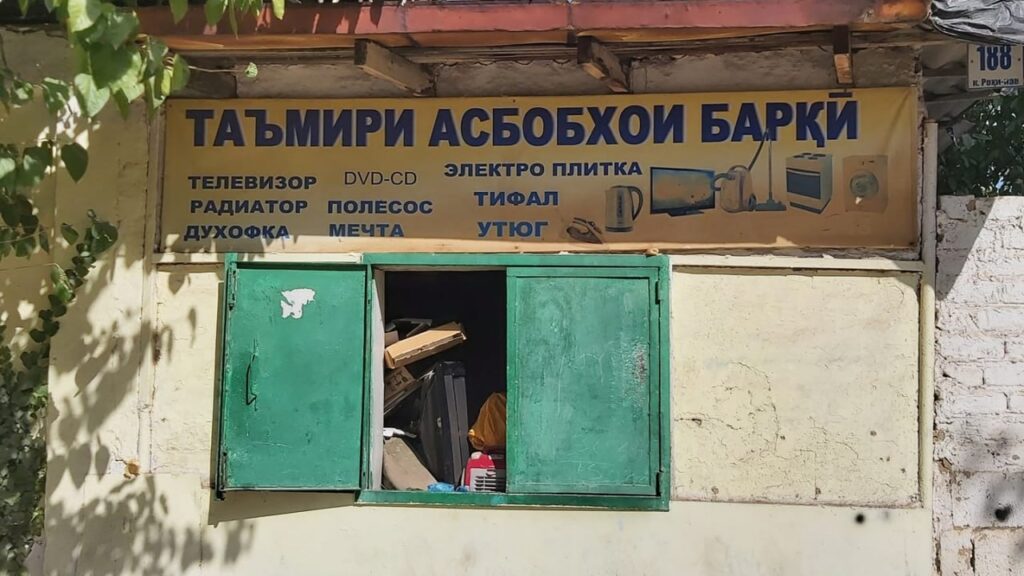
This issue has concerned the intelligentsia and society of Tajikistan for many years. Debates around the language of advertising, banners, and signs, their non-compliance with Tajik language norms, and the use of non-native words in social networks, provoke many discussions.
Linguists express concern about the use of words foreign to the Tajik language in inscriptions on signs and banners, emphasizing that “the city is decorated as if in America and Turkey.”
Why is the “Spelling” program still not available?
The promise of widespread implementation of the “Spelling” program, which, four years after the news of its launch, has not become available to users, is annually reiterated at press conferences by responsible officials. It was expected that the program would be presented along with the release of the “Tajik Language Orthographic Dictionary” — last year it was published, but the program is still missing.
However, Sahidod Rahmatullozoda stated at the parliamentary session that this point of the program was fulfilled. To this, Barno Saidvalizoda expressed doubt about its implementation.
Discussions about the letter “U” reached the parliament
One of Barno Saidvalizoda’s remarks, related to recent discussions on the publication of the “Tajik Language Orthographic Dictionary,” was the continuation of the debate over the letters “u” (short) and “ӯ” (long).
She criticized the inconsistency of the Dictionary, which was published a year ago, with the “Rules of Tajik Language Orthography and Punctuation,” published in 2021.
This issue became especially relevant after the last press conference in January 2026, when changes in the spelling of some words in the “Tajik Language Orthographic Dictionary,” particularly the replacement of the letter “ӯ” with “u” in some words, sparked discussions.
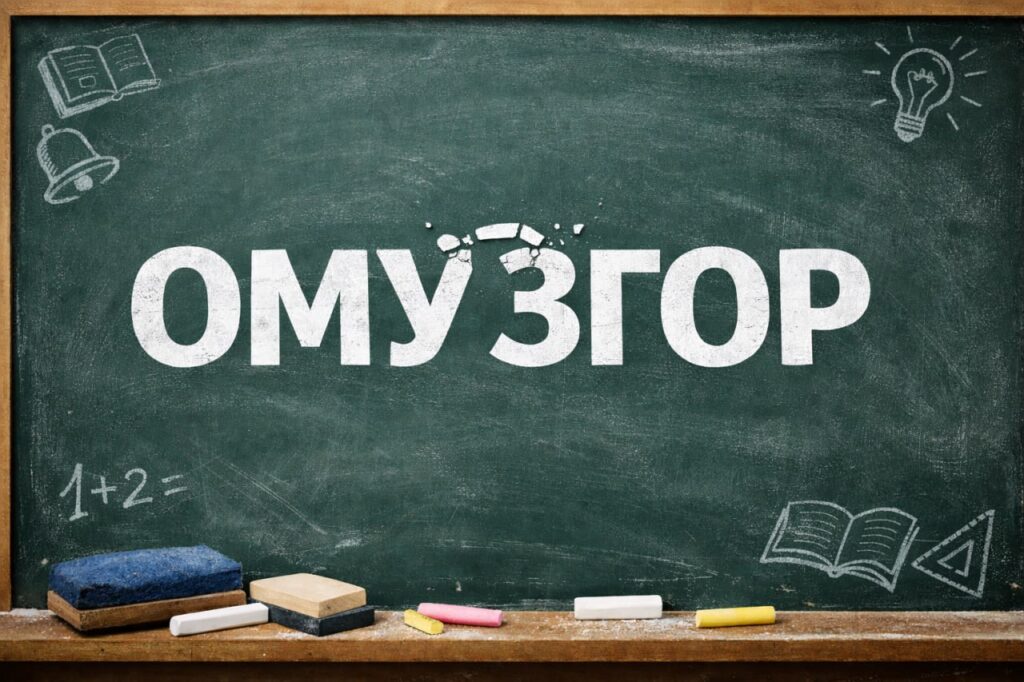
For example, in the new dictionary, the letter “ӯ” in words related to “omuz” (e.g., “omuzgor,” “omukhtan,” and “omuzish”) was replaced with “u,” which contradicts the stated Rules.
The orthography of the letter “ӯ” in the Tajik language has been debated for many years. Recently, a dispute arose on Facebook regarding the word “pajuhish,” which in the new dictionary is written as “pajuhish.” Most scholars did not accept the replacement of the letter “ӯ” with “u” in this word, considering it inherently Tajik.
Furthermore, it was mentioned in parliament that another point of the program — the development and publication of the “Tajik Language Orthoepy Dictionary” — was not fulfilled.
It is noted that overall, several points were not fulfilled during the first phase of the program’s implementation for various reasons, and measures need to be taken for the second phase.
However, the reaction of the Committee on Language and Terminology to these remarks and the reasons for the non-fulfillment of these points are still unknown.