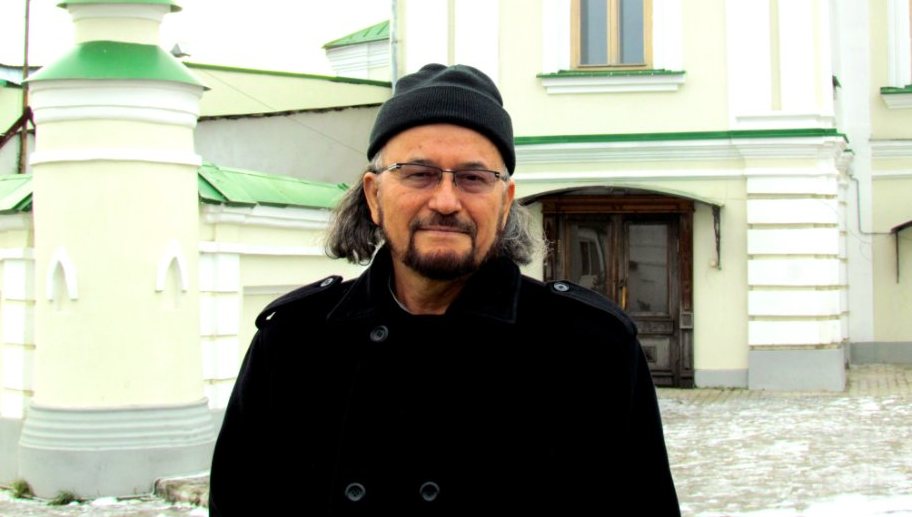
The Central Asian Analytical Network (CAAN) has published an interview with Nazif Shahrani, Anthropology professor at the Indiana University.
Asked about the idea of a greater Central Asia that has picked up where post-Soviet Central Asia is viewed in connection with South Asia and Afghanistan in particular, Nazif Shahrani it has taken too long for the leaders of Central Asian countries to realize it.
According to him, these regions share common interests with each other far more than they probably do with Russia or with Western Europe.
“The relationship between Central Asia, Southwestern Asia and the Middle East has a very long history going back more than 1,300 years since the arrival of Islam, and even earlier during the ancient times,” the researcher said.
“Sadly, national borders were created and imposed by outsiders—i.e., by Russians in Central Asia and by France and United Kingdom in southwestern Asia as well as the Middle East. Of course, we all know the Europeans themselves fought over their national borders in the 18th century and created independent countries with their own flags, names, national anthems and so forth. During the last 65-70 years, however, they have realized that those borders were not very helpful so they created the European Union.”
According to him, Central Asians and others in the neighboring regions did not create their own borders, they did not fight over the borders in Central Asia with each other or in the Indian subcontinent or in the Arab world for that matter. Their national borders were reportedly created by Europeans for them, and since they have become firmly solidified and now they are ready to fight with each other to protect them.
Shahrani considers that those artificial, European imposed border lines have kept the kinsmen and co-ethnics apart and their common cultural traditions have also grown distinct, moving in different orientations. In former Soviet Central Asian republics, they have reportedly become Russified and directed towards Russian culture; in İndian subcontinent, they have become more Anglicized and moved towards British culture. Some Arab and North African countries are influenced by France. “So it is about time that leaders of these countries tried to come together and create their own Central, Southwestern and Middle Eastern Union in the region to protect their own interests from the Chinese, Russian, Western European and American penetrations in their region,” he said.
On the current conflicts in the region, Shahrani says he does that think that they have religious roots. According to him, it is Europe and Russia trying to show those conflicts as religious, while “they are fundamentally political,” emanating from competition for access to the fast natural resources of those regions.
“Now because of artificially created countries and oppressive conditions, people from Central Asia, Afghanistan and Southwestern Asia are forced to look for work in Russia or Western Europe or indulge in the processes of brain drain even to America. These are the true nature of the problems in the region. I think, if within the region, the national leaderships could work through their interpersonal difference, and help create an environment where together, Central Asia, South Asia and Middle East could form a powerful economic and political bloc. One which could resist future penetration of China as well as remove the existing Russian, American and European exploitation of regional resources which has resulted in poverty and conflicts within and between the regions. But this requires wise leadership on the part of these countries and also insistence on the part of the people of this region for better and just governance. So, a more inclusive politics and economic systems in the region could in turn be able to address the myriads problems of poverty, unemployment, lack of opportunities.