The Global Environment Facility has approved 179 million U.S. dollars to support FAO-led projects
FAO welcomed a decision by the Council of the Global Environment Facility (GEF) on June 14 to provide US$179 million to support the UN agency's work with countries worldwide at the critical nexus between agriculture and the environment. This includes projects focused on biodiversity conservation, transboundary water resources management, sustainable land management, highly hazardous pesticide remediation, and climate change adaptation.
The funding stems from the GEF's Council meeting in Washington last week where governments approved two separate Work Programs totaling some US$966 million, the biggest allocation in GEF's history. This will benefit 91 nations, including 30 Least Developed Countries and 32 Small Island Developing States (SIDS).
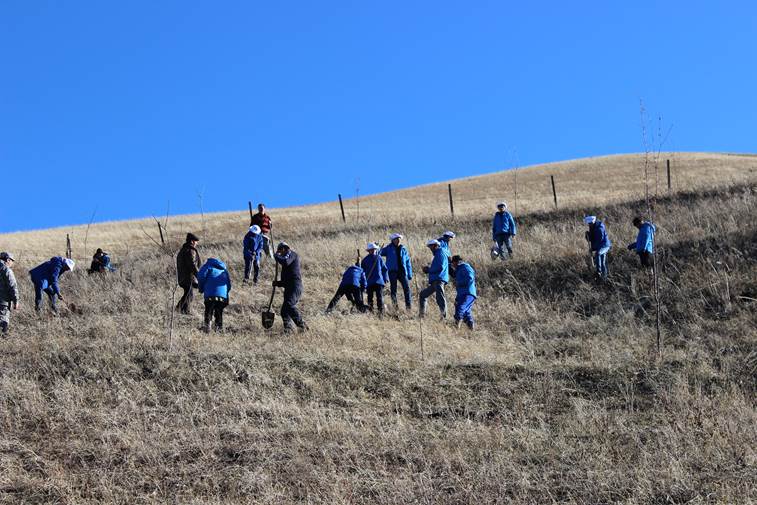
As part of one of the work programs, the GEF launched two landmark Impact Programs — on Dryland Sustainable Landscapes (DSL) and Food Systems, Land Use and Restoration. Some US$104 million of the funding will go to the DSL Impact Program, led by FAO, in 11 countries in Africa and Asia, in partnership with the World Bank, the International Union for the Conservation of Nature, and the World Wildlife Fund. The Impact Program will target efforts to avoid, reduce and reverse further deforestation, degradation, and desertification in: Angola, Botswana, Burkina Faso, Kazakhstan, Kenya, Malawi, Mongolia, Mozambique, Namibia, Tanzania and Zimbabwe.
FAO has also been invited to play a key role with the World Bank in a second GEF Impact Program the Food Systems, Land Use, and Restoration Program. All these initiatives will address the complex interaction between maintaining resilient production systems in drylands, promoting restoration, and improving livelihoods through a comprehensive landscape approach.
The GEF Council also approved a US$101 million work program for the GEF's climate change adaptation trust funds — the Least Developed Countries Fund (LDCF) and the Special Climate Change Fund (SCCF) of which US$44 million are FAO-GEF projects.
This LDCF/SCCF Work Program encompasses a range of adaptation priorities, including climate-smart agriculture and forestry, building urban, rural, and coastal community climate resilience, improving water resource management and availability for agriculture and domestic uses, strengthening climate resilience in vulnerable coastal communities, enhancing adaptive capacity of communities through integrated approaches.
FAO is a partner agency of the GEF, a partnership of 18 agencies and 183 countries to address the world's most challenging environmental issues related to biodiversity, climate change, land degradation, chemicals, and international waters. The GEF provides grants to countries to meet these challenges whilst contributing to key development goals, such as food security.