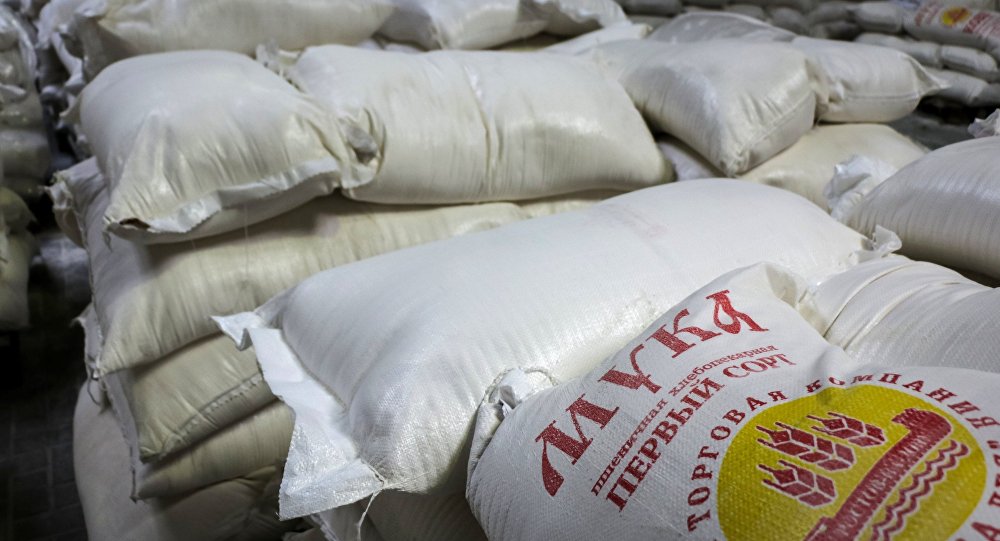
To provide Kazakhstan’s food security, the country’s authorities are imposing wheat, wheat flour and sunflower seed export quotas starting from July 8. An appropriate order on this subject was signed by acting Agriculture Minister Abulkhair Tamabek on July 5.
Kazakhstan’s unified system of legal information (USLI) notes the restrictions will be valid until September 30, 2022.
Kazakh Ministry of Agriculture passed a decree announcing that it will limit grain, flour and sunflower seed export quotas to 550,000 tons, 370,000 tons and 15,000 tons respectively.
Recall, Kazakhstan government had earlier decided to impose wheat and wheat flour export quotas for two months from April 15 to June 15. The decision was made at a meeting of the Operational Headquarters of the Government of Kazakhstan that took place on April 1.
On April 16, Kazakh Ministry of Agriculture Yerbol Karashukeyev passed a decree announcing that it will limit grain and flour exports to 1 million tons and 300,000 million tons, respectively, for two months starting on April 16 and ending on June 15.
While closer to the end of the term (June 15), Yerbol Karashukeyev said the wheat and flour restrictions will be extended until September 1 in order to avoid food crisis.
Inbusienss.kz reported at the time that by imposing wheat and wheat flour export quotas, Kazakhstan is trying to secure its domestic market and maintain its traditional sales market.
Kazakhstan's decision to ban wheat exports is really bad news for the country’s poorer Central Asian neighbors, including Tajikistan.
To-date, Kazakhstan has provided the bulk of Tajikistan’s grain and flour imports. According to some sources, Tajikistan annually buys nearly 1 million tons of wheat from Kazakhstan, which accounts for up to 94 percent of Tajikistan’s grain imports.
Thus, the Agency for Statistics under the Government of Tajikistan says Tajikistan has imported more than US$60 million worth of about 203,000 tons of wheat from Kazakhstan over the first three months of this year, which is 7.6 percent fewer by weight and 12.7 percent more by cost than in the same period last year.
Tajikistan’s annual requirements in wheat are more than 2 million tons; therefore, according to the forecast of the Ministry of Economic Development and Trade (MoEDT), Tajikistan is expected to import 1.2 millions of wheat this year.
Some experts predicted in June that as a result of Kazakhstan’s decision to prolong the curbs beyond June, Tajikistan will face severe food shortages.
The Tajikistan authorities, however, state that the country has stocked up on sufficient amount of food products, including wheat and wheat flour.
The Government of Tajikistan has instructed relevant ministries and agencies to take necessary measures to get non-tariff quota for grain from Russia.
This is stated in a government regulation on the plan of actions to prevent the impact of possible risks on the national economy.
It is supposed that Tajikistan will pay for Russian grain imported on concessional terms in Russian rubles.