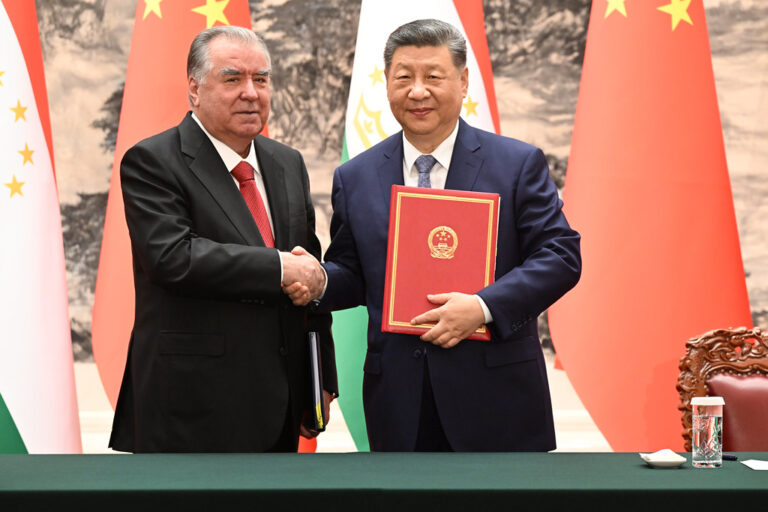
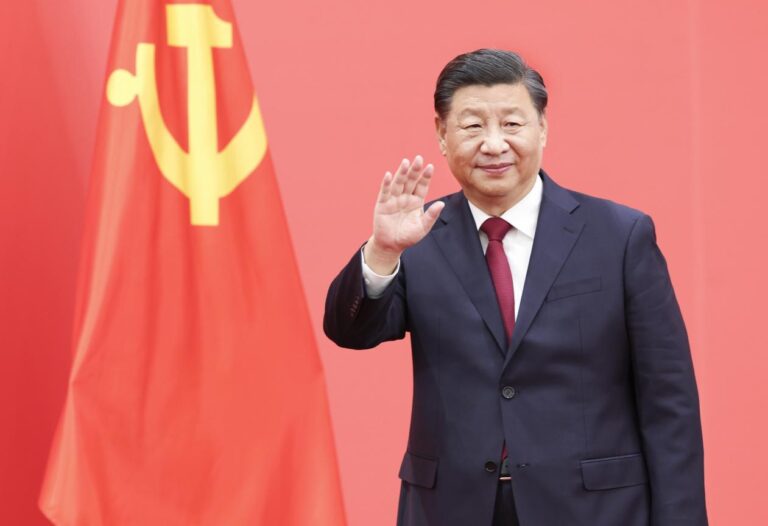
Shortly after wrapping up a high-profile meeting in Moscow with Russian President Vladimir Putin, Chinese leader Xi Jinping turned his sights toward Central Asia and announced plans to host a summit in May, says an article by Reid Standish.
The Kremlin traditionally viewed Central Asia as its strategic backyard, but has been displaced by China as the premier economic force for the region’s five nations.
The article entitled “What Do Closer Chinese-Russian Ties Mean For Central Asia?”, in particular, notes that Moscow’s war in Ukraine has released geopolitical and economic shock waves and seen China’s role in the region grow through diplomatic summits and new initiatives that have disrupted the tightrope that Central Asian governments have walked for balancing their ties between China, Russia, and the West.
Analysts argue that as Xi and Putin strengthen their partnership, Central Asia is now left walking an even wobblier tightrope than before, analysts argue.
According to them, Central Asia is not caught by surprise by this growing cooperation between Moscow and Beijing, but the big question is how they will adapt their foreign policies to these big changes.
The article notes that China once positioned itself cautiously in Central Asia to ensure it didn’t upset Russia as the Kremlin guarded its influence in the region.
But that dynamic has reportedly shifted in recent years. Beijing has expanded the scope and scale of the Shanghai Cooperation Organization (SCO) and moved to grow its leadership role in the region with stepped up diplomatic engagement and a heightened security presence.
In a statement issued on March 21 following the Moscow talks, Xi and Putin spoke about their shared interests in Central Asia, saying that they would work together “to support the countries of Central Asia in ensuring their sovereignty and national development” and safeguard them against so-called “color revolutions and external interference in the affairs of the region.”
Warnings of a “color revolution” have reportedly been a standard talking point from Beijing and Moscow when discussing Western involvement in Eurasia.
In a potential blueprint for navigating future crises in Central Asia, Beijing deferred to Russia to act as the key political and security actor.
But Haiyun Ma, a professor at Frostburg State University who studies Beijing's relations with Russia and Central and South Asian countries, told Radio Liberty that Moscow’s influence has declined and regional governments have looked to gain some political distance from Moscow.
“It seems clear that Central Asian states would prefer China’s economic and peaceful development as a model to Russia’s political and military coercion,” he said.
This shift has reportedly created new opportunities for Beijing as it looks to shore up its influence along its western border at a time of intensifying competition with the United States.
Beijing and Moscow continue to find ways to harmonize the Belt and Road Initiative with the Russian-led Eurasian Economic Union and China has also agreed to tentatively fund the China-Kyrgyzstan-Uzbekistan railway, according to the article.
The author notes that despite Russia’s weakened state and unease in the region over its invasion of Ukraine, Central Asian states have managed to capitalize on the fallout from its sanctions-riddled economy.
Russia remains a top destination for work for millions of Central Asians, with remittances sent home by migrants holding steady to pre-invasion levels or in some cases rising, according to the World Bank.
Trade turnover between Russia and Central Asia — particularly with Kyrgyzstan and Uzbekistan — has also grown since February 2022 as Moscow has needed to replace European imports and sell its own products.