A woman from Khatlon’s Kuroson district detained for brutally beating her 10-year-old child

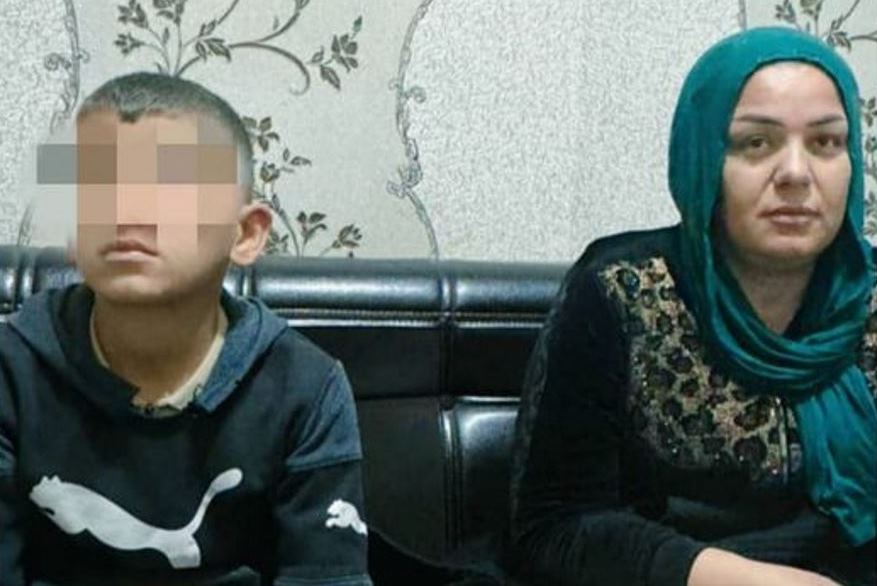
In Khuroson district of Khatlon province, a woman was detained for severely beating her underage son in a public place. A video of the incident, filmed by witnesses, has circulated in the Tajik segment of social media. The Interior Ministry’s Office in Khatlon province says the detained woman was identified as 35-year-old Dilorom Hakimova. "This […]

Asia-Plus

In Khuroson district of Khatlon province, a woman was detained for severely beating her underage son in a public place.

A video of the incident, filmed by witnesses, has circulated in the Tajik segment of social media.

The Interior Ministry’s Office in Khatlon province says the detained woman was identified as 35-year-old Dilorom Hakimova.

"This video sparked a strong public reaction. Social media users condemned the mother and called on the Khatlon police department to take legal action regarding her behavior," read a statement released by the Interior Ministry’s Office in Khatlon province department's statement read.

During the investigation, regional police officers arrested the woman and handed her over to the Khuroson district police department.

It was revealed that she is a resident of the district but temporarily residing in Dushanbe.

The video shows the woman brutally beating her 10-year-old son on the street.  She hits the child in the face, causing him to bleed.

According to the police, the necessary materials regarding the detained woman have been prepared and are currently under review by law enforcement authorities.

In Tajikistan, the scale of violence against children is vastly underestimated, partially because prevalence estimates come from administrative data used by the health or justice systems and partly because of the widespread beliefs that lead people to see violence as a norm rather than a problem demanding attention.  A study carried by UNICEF in several districts found that violence is a widespread form of disciplinary punishment within communities around the country.

It is to be noted that in August this year, Tajikistan became the 67th country worldwide to ban corporal punishment of children.  Tajikistan has achieved full prohibition of corporal punishment of children with the enactment of The Law of The Republic of Tajikistan on Responsibility for Child Education and Upbringing 2024 (Former Law on Parents Responsibilities in Child Upbringing 2011).


Article translations:

Related Article

Оби зулол

Most Read

Join us on social media!

Recent Articles

Mudflows and dust storms expected in Tajikistan

Citizens are urged to protect themselves from dust.

Russia doubles temporary stay duration for truck drivers from CIS and Georgia

Tajik drivers will have their term increased from 90 to 180 days a year.

How a guide dog project could help people with visual impairments in Tajikistan

In Tajikistan, there is an enthusiast who can build such a school, but he urgently needs help, primarily financial.

Wildberries opened access to the platform for all sellers from Tajikistan

Now local brands, manufacturers, and individual entrepreneurs can enter the largest online platform and expand their sales market.

CMWP Uzbekistan: The boutique hotel market in Tajikistan shows the fastest growth in the region

Such hotels in the republic offer their guests a high level of comfort and convenience.

Emomali Rahmon signs decree on increasing salaries and paying bonuses to IT sector workers

The document provides for the creation of a new incentive system for specialists in the field of information technology.

Not advertising, but influence: what was discussed at IMPACT Creative Night and why businesses need meaning today

Today, audiences trust direct advertising less and less, which means brands have to compete not for attention, but for trust and a place in the agenda.

Russia extends the experiment on collecting biometrics from foreigners

The decision was justified by the necessity of gradually modernizing all border crossing points.

“Convenient, affordable, and cheap”: Dushanbe residents speak out on raids against shared taxis

They say that late at night buses and trolleybuses disappear from the streets, so cheap route taxis remain the only way for many to get home.