
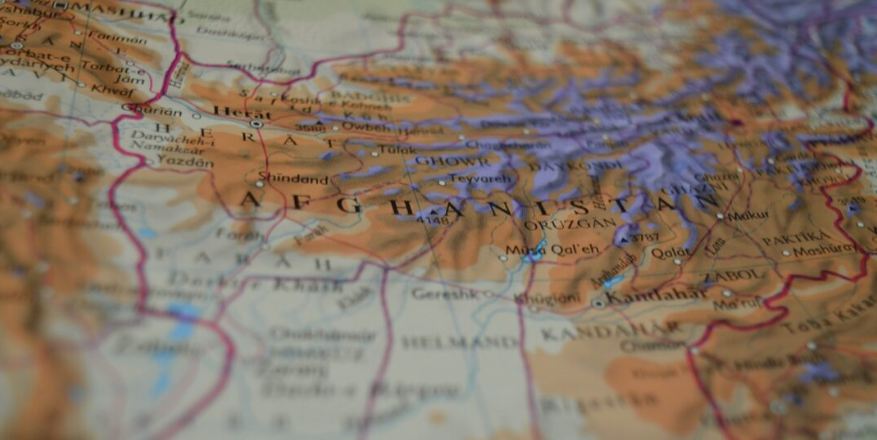
Ms. Nargiza Umarova, a senior researcher at the Institute for Advanced International Studies at UMED, considers that the geopolitical shifts following the war in Ukraine have presented Central Asian nations with an opportunity to diversify trade routes and reduce their dependence on Russia for transit. According to her, the region is reclaiming its historical role as a land-based transport and logistics hub, connecting East and West, North and South.
As part of this transformation, southern transit routes are gaining prominence, with Iran and Afghanistan emerging as key players. While Iran has long served as a transit corridor, Afghanistan is now stepping into this role, as demonstrated by the Taliban government’s push to implement major transport initiatives in collaboration with neighboring countries.
Afghanistan’s growing role in regional transit
Since coming to power, the Taliban have revived almost all previously proposed regional and interregional transport projects, including:
- The Kabul Corridor (Termez –Mazar-e Sharif – Kabul — Peshawar railway).
- Railroads on the Khaf-Herat, Mazar-e-Sharif — Herat, and Herat-Kandahar routes.
- Reviving the Lapis Lazuli Corridor, originally proposed in 2012.
Some of these projects have been reassessed by external stakeholders, leading to new ambitious initiatives.
One such initiative is being led by Turkmenistan, which has agreed with the Taliban to construct the Torgundi-Herat-Kandahar-Spin Boldak railway, connecting to Pakistan and its ports. Turkmenistan has since invited Kazakhstan to participate in the project, recognizing its strong trade ties with Afghanistan and strategic position between Russia and China. This new corridor could become an alternative to Uzbekistan’s Trans-Afghan Railway to Peshawar, while also helping the Taliban achieve their goal of connecting Afghanistan’s major cities by rail.
Turkmenistan’s initiative will also strengthen the Lapis Lazuli Corridor, which connects Herat to Ashgabat, the Turkmenbashi port, Baku, Georgia, and further to Ankara and Istanbul—providing Afghanistan with a direct and diversified route to Europe.
Economic and geopolitical impact on Central Asia
The growing engagement of Central Asian countries in Afghanistan’s transit networks is a positive trend, unlocking regional trade potential and providing significant economic and geopolitical benefits.
However, increased competition between Central Asian nations for transit dominance—or interference by external players with conflicting interests—could complicate matters.
Turkmenistan and Kazakhstan’s strategic moves
In July 2024, Ashgabat and Astana agreed to jointly promote the Torgundi-Herat-Kandahar-Spin Boldak railway. Soon after, Turkmen officials traveled to Kabul to confirm financing for the Torgundi-Herat segment, with construction officially beginning in September 2024 on a 22-km railway line from Torgundi to Sanobar.
The Torgundi-Herat trade route has potential expansion in three directions:
- Pakistan – connecting to South Asian markets.
- Iran – providing an alternative route westward.
- Caspian Sea – linking Afghanistan to the Lapis Lazuli Corridor and European markets.
The Torgundi-Herat-Kandahar-Spin Boldak railway is seen as a strategic asset not only for Afghanistan but also for major regional powers. While this route is longer (926 km) than the Kabul Corridor (647 km), it offers a potential extension to Iran, adding a key advantage.
Iran, in turn, seeks new routes to Afghanistan and Central Asia, complementing its Khaf-Herat railway, which is near completion. Iran and India have long collaborated in developing transit infrastructure, particularly around the Chabahar port, positioning it as a competitor to Pakistan’s Gwadar port.
Russia, China, and the race for Afghan transit
Turkmenistan is already strategizing to ensure its Afghan railway is commercially viable by securing transit cargo flows. Expensive infrastructure projects of this kind rely on transit trade for profitability, similar to Uzbekistan’s Termez — Mazar-e Sharif – Kabul — Peshawar railway, which is expected to handle 22 million tons of cargo annually by 2030.
Ashgabat has chosen Kazakhstan as a key partner, partly because of its border with Russia, which sees Afghanistan and South Asia as growing markets for Russian exports, particularly energy resources.
In 2023, the Taliban invited Russia and Kazakhstan to join Afghanistan’s railway projects. Both nations accepted, each for their own reasons:
- Kazakhstan seeks multiple transit options to negotiate better tariffs.
- Kazakhstan also benefits as a key intermediary between Russia and Afghanistan.
- Russia, under Western sanctions, needs new export routes, including through Afghanistan to South Asia.
Russia also hopes to leverage the Afghan transit boom to advance the long-delayed Turkmenistan-Afghanistan-Pakistan-India (TAPI) gas pipeline, which resumed construction in September 2024.
Uzbekistan’s role in Afghan transit
Uzbekistan initially proposed a multimodal route in 2022: Belarus – Russia – Kazakhstan – Uzbekistan – Afghanistan – Pakistan (5,532 km).
In 2023, the involved nations signed a memorandum to implement the project, which promises cargo delivery from Northern Eurasia to South Asia in just 20 days—three times faster than sea routes.
Meanwhile, the Taliban revealed plans in 2023 to build a 1,468-km railway from Mazar-e Sharif to Herat and Kandahar. This would be the shortest land route between Moscow and New Delhi, bypassing Pakistan. India has a strategic interest in securing transit access to Afghanistan and Central Asia via Iran’s Chabahar port, bypassing Pakistan entirely.
China’s expanding role via the Wakhan Corridor
Iran views Afghan transit as a priority, not just for access to Central Asia, but also to China—its biggest trade partner. With the completion of Khaf-Herat railway, Iran aims to extend it to the Wakhan Corridor in Afghanistan’s Badakhshan, where the borders of China, Pakistan, Afghanistan, and Tajikistan converge.
By linking this corridor to the Termez — Mazar-e Sharif – Kabul — Peshawar railway, China could gain a direct rail connection to Afghanistan, strengthening its grip on Afghanistan’s resources and increasing its exports to the region.
Conclusion: Afghanistan as a regional transport hub
Afghanistan’s transport development is reshaping regional trade dynamics, benefiting Central Asia, Iran, Russia, China, and India. Key takeaways:
✅ Afghanistan is becoming a key transit hub, connecting Eurasia to South Asia.
✅ Uzbekistan, Turkmenistan, and Kazakhstan are competing to lead transit corridors.
✅ Russia and China are leveraging Afghan transit routes for economic gain.
✅ Iran and India are expanding transport ties through Chabahar and Wakhan.
✅ The Taliban are playing multiple sides, securing investment from Central Asia, Russia, China, and Iran.
Afghanistan's infrastructure revival marks a new era in regional connectivity, with Central Asian nations poised to reap economic benefits—if they can manage competition and geopolitical risks effectively.
CIS
685,000 foreigners added to Russia’s registry of controlled persons
DUSHANBE, March 12, 2025, Asia-Plus — The Russian Ministry of Internal Affairs has added 685,000 foreign nationals to the registry of controlled persons for lacking legal grounds to stay in Russia. This was announced by Interior Minister Vladimir Kolokoltsev in an interview with propagandist Pavel Zarubin, as reported by Meduza.
"The main goal of this registry is to limit the number of foreign citizens who are illegally staying in our country, meaning those who have lost their legal grounds for being here. This registry currently includes 685,000 people," Kolokoltsev stated.
According to him, foreigners listed in the registry must report to the internal affairs authorities by April 30 to legalize their stay, after which they will be removed from the list.
Tighter migration policies in Russia
Following the Crocus City Hall terrorist attack in March 2024, Russian authorities have significantly toughened migration policies.
Among the new restrictions:
- Stricter rules for obtaining Russian residence permits through marriage.
- A new deportation mechanism for illegal immigrants.
- A ban on enrolling migrant children in schools unless they speak Russian.
The registry of controlled persons has been in effect since February 5, 2025. Foreigners added to the list will face severe restrictions on their rights while in Russia.
