Central Asia enters the upcoming growing season with lower water reserves compared to last year. A significant factor contributing to this is the considerably lower water inflow into the Aral Sea, which, during the first months of the interseasonal period, received only about two-thirds of the expected volume.
After the 92nd meeting of the Interstate Coordination Water Commission, the official results for the 2025–2026 interseasonal period were released. The report includes data on the usage of water resources by countries in the region, water flow levels in the Amu Darya and Syr Darya rivers, as well as the current state of reservoirs.
Amu Darya: water levels significantly below normal
The Amu Darya basin experienced an interseason with reduced water flow. As of February 11, the water flow level was only 66.8% of the normal rate. In comparison, last year this figure was 101.8%, indicating that the river was almost in a full-flow condition.

The decrease in water inflow affected water accumulation in the Tuyamuyun Reservoir. As of February 10, 2026, its volume stood at 4,349 million cubic meters, which is 610 million cubic meters lower than last year’s level of 4,959 million cubic meters.
Due to the more difficult situation, flushing irrigation in the lower reaches of the river began only on February 10, while last season it started on December 15.
Tajikistan fully used its water allocation — 2,073.4 million cubic meters, which is 100% of the allocated volume. Turkmenistan used 3,439.5 million cubic meters, or 96% of its allocated limit, while Uzbekistan used 2,600.4 million cubic meters, or 75.3% of its share.
Over the course of four months, 935 million cubic meters of water were directed to the Amu Darya delta and the Aral Sea, compared to the planned 1,400 million cubic meters — about two-thirds of the planned volume.
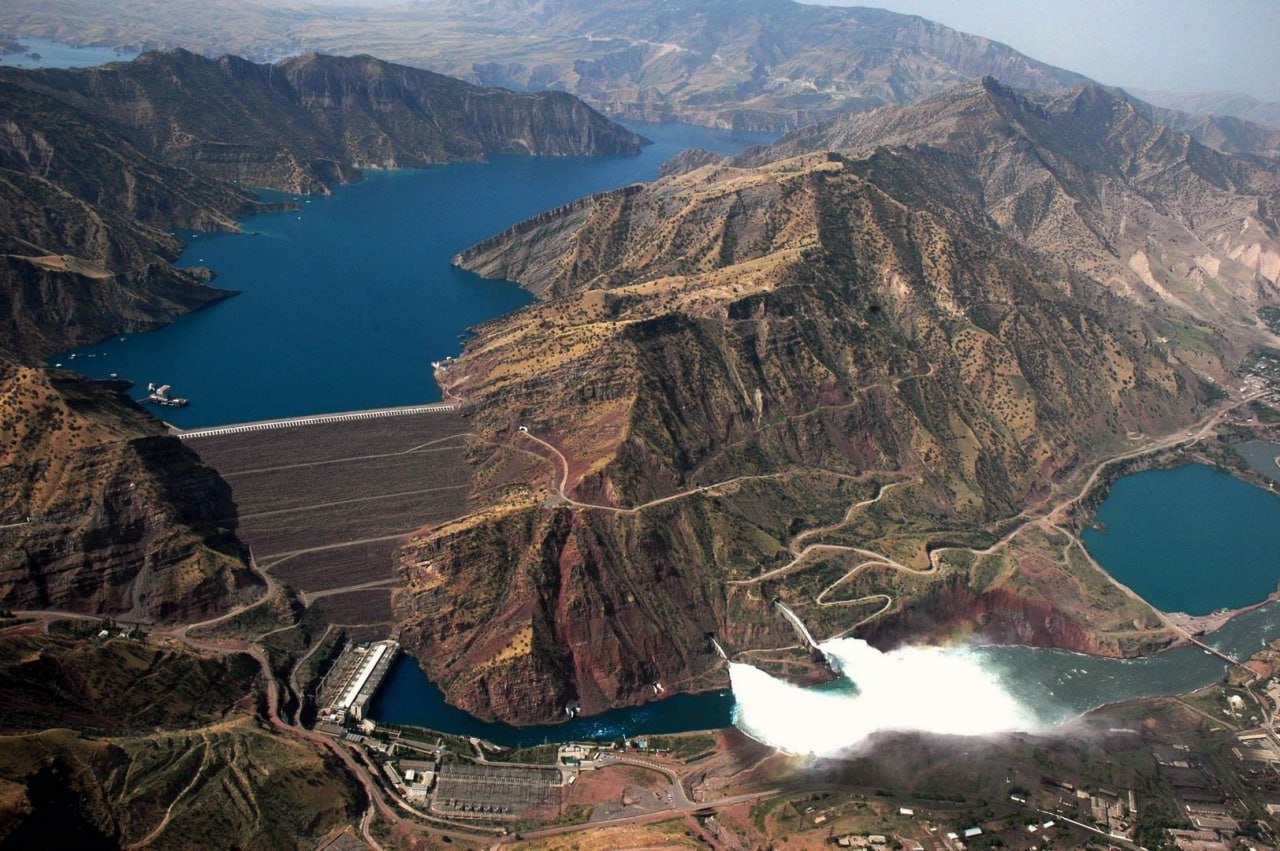
The operation of the Nurek Reservoir followed the approved schedule. The inflow of water was 2,854.6 million cubic meters, while the release amounted to 5,084.3 million cubic meters. By the end of the reporting period, the reservoir volume reached 7,910 million cubic meters, slightly higher than the forecasted level.
Syr Darya: above forecast, but below normal
The situation in the Syr Darya basin appeared more stable. With an overall inflow norm of 11,782 million cubic meters, the forecast was 9,170 million cubic meters. In reality, 10,255 million cubic meters of water arrived, which is 1,085 million cubic meters above the forecast but still only 87% of the normal rate.
Inflows to the upper reservoirs matched the forecast and totaled 3,591 million cubic meters. Lateral inflow was higher than expected, partially compensating for the water shortage.
A total of 15,536 million cubic meters of water was released from reservoirs during the interseason, which is 99% of the agreed schedule. Water distribution to the countries occurred within the established limits. Of the total limit of 2,633 million cubic meters, 2,155 million cubic meters were used, or 82%.
The majority of the volume was directed to Uzbekistan — 1,954 million cubic meters. Tajikistan used 35 million cubic meters against a limit of 173 million cubic meters.
As of February 11, 2026, water reserves in the Naryn-Syr Darya cascade reservoirs totaled 16,774 million cubic meters, which is 2,511 million cubic meters less than the previous year.