DUSHANBE, April 2, 2012, Asia-Plus – On Navrouz, Tajik President Emomali Rahmon spoke to Euronews on the situation in Tajikistan 20 years after independence, relations with Russia and Iran and democratization in the country.
Asked whether international sanctions imposed on Iran had an impact on relations between Tajikistan and Iran, President Rahmon said, “As far as we know, the Islamic Republic of Iran does not intend to buy or make nuclear weapons. Iran has progressed, the country has developed. All the problems regarding the nuclear issue must be solved solely through dialogue and diplomatic means.”
“These sanctions have, of course, had an effect on us. I think not only Tajikistan, but many of developed countries such as European countries and Japan have been affected as well. The prices of oil and gas have increased. This benefits the oil-producing countries and not those consuming oil. Many of the developed countries which used to buy Iran’s oil have been affected by these sanctions, negatively. The increase in world oil and gas prices has, of course, damaged our economy.”
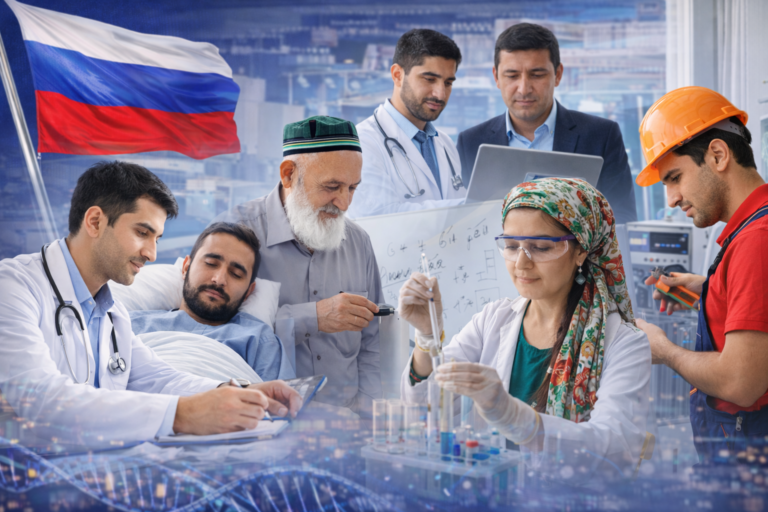
On the Tajik labor migrants working in the Russia Federation, President Rahmon said that about a million Tajik nationals live and work in Russia. “Through their work, they help their families and also help the economy of their country.”
“The Government of Tajikistan has very good arrangements with the Russian authorities to support the rights and interests of the Tajik migrant workers in the Russian Federation,” said Emomali Rahmon. “I don’t believe that our relations and our strategic cooperation with Russia have restricted Tajikistan’s relations with other countries. We have a foreign policy of open doors.”
Asked whether simply holding elections in a country means there is democracy, President Emomali Rahmon noted that a government that has had the same policy and the same ideology for 70-80 years, cannot change in just 10-20 years into the model of a democratic and civilized society. “It takes time to change the mentality of people,” he noted.
“This process has started in Russia and other former Soviet republics. During the Russian elections – in which political groups could freely express their opinions – did that not show some progress, moving towards democracy? But you know that mistakes and errors are inevitable in the beginning. An American or European style democracy in Russia or other former soviet republics in just a year or so, is impossible, it is just a dream.”
Asked about observance of human rights in Tajikistan, President Rahmon said, “I remember in 1990-91, in the first year of independence, there were only 4 private newspapers, we had just one TV station, and there was just one state-owned news agency. But now there are more than 3000 active organizations, political parties, and NGOs.”
“Around 500 newspapers and magazines are published, 60% of which are privately-owned. There are 44 television stations, just 4 of which belong to the government.
“Little by little, we have done a lot of work to protect human rights in Tajikistan. As you know we have many problems and this process regarding growth and development of our society will find its way, step by step.”
Answering question from Euronews about security on the border between Tajikistan and Afghanistan, the Tajik head state noted, “If you compare today’s situation with ten or eleven years ago, there is a huge difference.” According to him, the security situation is much better now.
“The big problem is drug smuggling. The authorities in charge both in the Republic of Tajikistan and in the Islamic Republic of Afghanistan are cooperating to fight this both at the borders and inside Afghanistan, but we need help from the international community.
“Like problems of international terrorism and extremism, drug smuggling is a global problem. It is not limited to Afghanistan, Tajikistan and Central Asia. Why should we talk about this?
“There are chemicals sent to Afghanistan to help production of chemical drugs. There are no such factories manufacturing these chemicals in Tajikistan, or Afghanistan so where do they come from? Through which countries are huge volumes of these materials smuggled? In the future, this is where efforts must be targeted.”