DUSHANBE, October 5, 2012, Asia-Plus — The Russian side is sure that Tajikistan’s admission to the Customs Union will give an impulse to further development of the country’s economy.
Representatives of a Russian delegation participating in a forum of Tajik and Russian business people in Dushanbe remarked this on October 5.
During the forum, Andrey Belyaminov, Head of Russia’s Federal Customs Service (FTS), advised Tajik businesspeople to thoroughly study the issues related of Tajikistan’s admission to the Customs Union, “because it is the business community that may induce the authorities to take the final decision.”
Kyrgyzstan is actively discussing the issue of joining the Customs Union, Belyaminov noted. According to him, Belarus and Kazakhstan have only benefited from participation in the Customs Union.
Chairman of the Coordination Council of the Eurasian Business Council Oleg Soskovets, who is also President of the Association of the Financial and Industrial Groups of Russia, noted that the economy of the former Soviet Union has already been played out.
“Tajikistan will gain economic benefits by joining the Customs Union,” said Soskovets. “Besides, Tajik labor migrants will get certain privileges. For example, they will be able to stay in Russia for a month without registration.”
Speaking at the forum, Nematjon Sanginov, the first deputy head of the Customs Service under the Government of Tajikistan, noted that unified economies of several countries might address modern challenges and threats more actively.
Meanwhile, Ms. Larisa Kislyakova, deputy chairperson of Tajikistan’s Chamber of Commerce and Industry (CCI), noted that the country’s joining the Customs Union would lead to increase in customs duties. “We will be forced to purchase some imported commodities at higher prices and delivery of goods will decrease,” said Kislyakova. “We will have losses at first.”
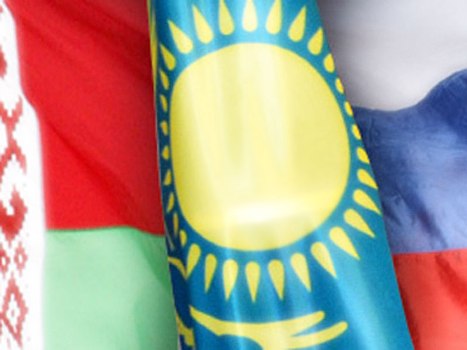
The Customs Union between Belarus, Kazakhstan, and Russia came into existence on January 1, 2010. Belarus, Kazakhstan, and Russia are to go on with economic integration and were set to remove all customs borders between each other after July 2011. I t is separate from the Eurasian Union.
Russia has worked to integrate Tajikistan and Kyrgyzstan into the Customs Union. Kyrgyzstan has stated their desire to join the Customs Union. Tajikistan also plans to join, but due to it”s lack of a common border with any current member state must wait until neighboring Kyrgyzstan, which borders current member state Kazakhstan, is granted membership