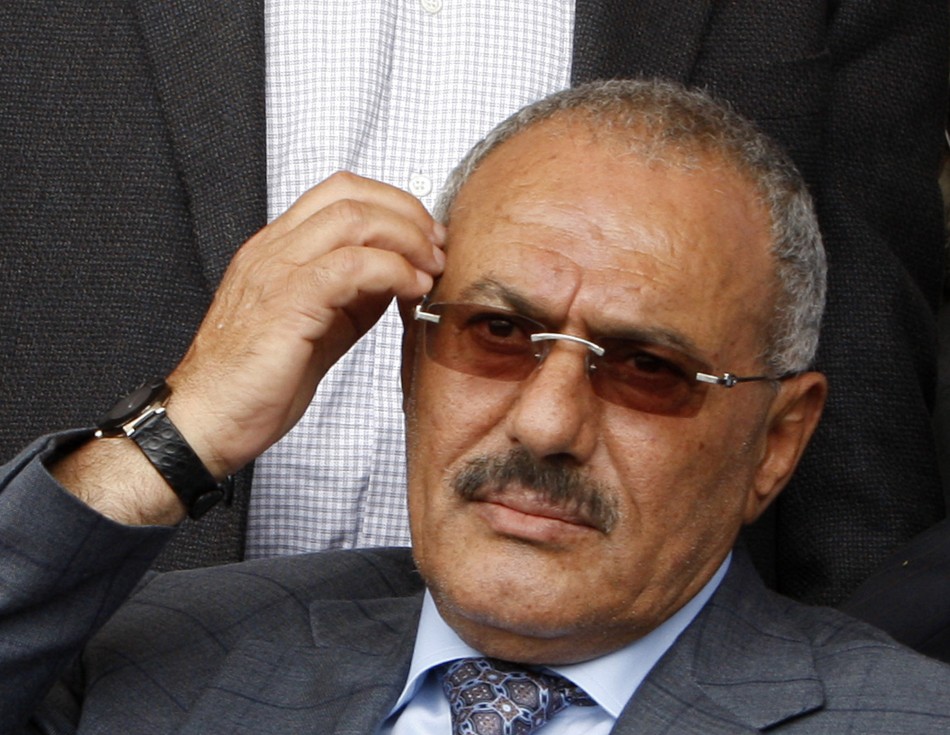
International media reports say Yemen's ousted president Ali Abdullah Saleh has been killed by Houthi rebels near the capital, Sanaa.
The death was first announced on Monday by the Sanaa-based interior ministry, controlled by Saleh's allies-turned-foes, the Houthi rebel group.
His killing was later confirmed to Al Jazeera by Saleh's political party, the General People's Congress (GPC).
There were earlier reports that the Houthi rebels blew up one of Saleh's houses, after storming the property.
Houthi sources said Saleh was killed by the rebels in a rocket-propelled grenade and shooting attack on his car at a checkpoint outside Sanaa.
Yasser al-Awadi, the GPC's assistant secretary-general, was also killed, according to Al JAzeera.
The BBC says the Houthis' leader hailed the news as a "great and significant occasion".
Abdul Malik al-Houthi reportedly said they had foiled a “conspiracy” by a Saudi-led coalition backing the government, to whom Mr. Saleh had made peace overtures.
Meanwhile the United Nations said air strikes on Sanaa had intensified and the fighting was spreading to other governorates such as Hajjah.
The report, by the UN Office for the Coordination of Humanitarian Affairs, said roads had been blocked and tanks were on the streets. Some of the fiercest fighting was reportedly in the diplomatic area near the UN compound.
The Guardian says Ali Abdullah Saleh’s death marks a dramatic shift three years into a war in a state of stalemate. It risks the conflict becoming even more intractable.
Without Saleh, the Houthis are strengthened – at least in the short term. “There’s a possibility that [Saleh’s] apparatus will be radically weakened, if not marginalized in the coming period; this leaves the Houthis as the key power in northern Yemen,” said Adam Baron, visiting fellow at European Council on Foreign Relations, according to The Guardian.
Saleh, a former military officer, became the president of North Yemen in 1978 after a coup but, when north and south reunited in 1990, was elected as the first president of the new country.