Tajikistan last year reduced primary aluminum exports by nearly 22 percent

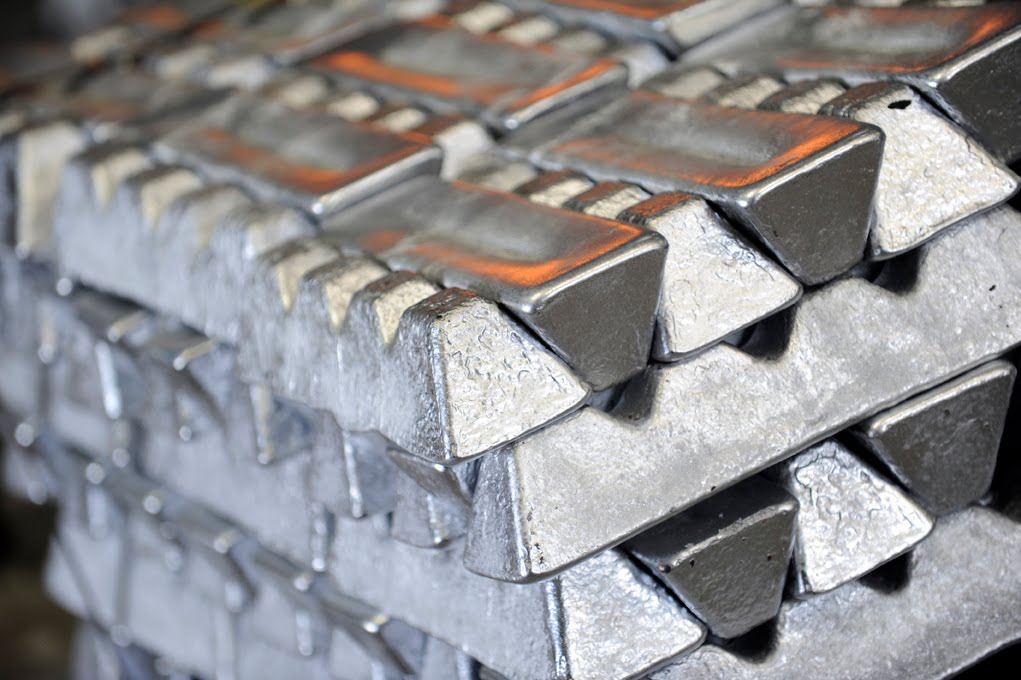
Tajikistan last year exported some 103,000 tons of primary aluminum, which is 29,000 tons less than in 2016, according to the Customs Service under the Government of Tajikistan.  In 2017, the international price for one ton of primary aluminum was 1,970 U.S. dollars. The Ministry of Industry and New Technologies (MoINT) had earlier reported that […]

Asia-Plus

Tajikistan last year exported some 103,000 tons of primary aluminum, which is 29,000 tons less than in 2016, according to the Customs Service under the Government of Tajikistan. 

In 2017, the international price for one ton of primary aluminum was 1,970 U.S. dollars.

The Ministry of Industry and New Technologies (MoINT) had earlier reported that the Tajik Aluminum Company (TALCO) produced 85,600 tons of primary aluminum over the first ten months of 2017, which was 23 percent less than in the same period of 2016.  

Aluminum production has begun significantly decreasing in Tajikistan since November 2016.

Representatives of the Ministry of Economic Development and Trade (MoEDT) attribute the setback in aluminum production in the country to an electricity blackout that hit Tajikistan on October 28, 2016. 

The TALCO press center noted on October 30 that the electricity blackout had nearly led to shutdown of the Tajik aluminum smelter. 

Electricity blackout reportedly hit the city of Tursunzoda on October 28 at 6:31.  Barqi Tojik (Tajikistan’s national integrated power company) tried to resume electricity supply to the aluminum smelter at 8:40 pm but it failed.  Power supply was resumed only at 9:30 pm but Barqi Tojik needed another one and a half hours to resume normal power supply to the smelter, therefore, normal power supply to the smelter was reportedly resumed at 11:18 pm.

Damaged caused to the Tajik aluminum smelter by the power outage has been estimated at 8 million U.S. dollars.   

The Tajik Aluminum Company (TALCO) is one of the ten largest aluminum smelters in the world.  It consumes more than 30 percent of the country’s electrical power.  TALCO is wholly owned by the Tajik government.  Tajikistan does not mine alumina but imports the raw material through tolling arrangements.

Construction of the Tajik aluminum plant (TadAZ) began in 1972, and the first pouring of aluminum took place on March 31, 1975.  THz Tajik aluminum smelter has a rated capacity of 517,000 tons of primary aluminum per year.  On April 3, 2007, TadAZ was officially renamed to TALCO – Tajik Aluminum Company.
Article translations:

Related Article

Оби зулол

Most Read

Join us on social media!

Recent Articles

Mudflows and dust storms expected in Tajikistan

Citizens are urged to protect themselves from dust.

Russia doubles temporary stay duration for truck drivers from CIS and Georgia

Tajik drivers will have their term increased from 90 to 180 days a year.

How a guide dog project could help people with visual impairments in Tajikistan

In Tajikistan, there is an enthusiast who can build such a school, but he urgently needs help, primarily financial.

Wildberries opened access to the platform for all sellers from Tajikistan

Now local brands, manufacturers, and individual entrepreneurs can enter the largest online platform and expand their sales market.

CMWP Uzbekistan: The boutique hotel market in Tajikistan shows the fastest growth in the region

Such hotels in the republic offer their guests a high level of comfort and convenience.

Emomali Rahmon signs decree on increasing salaries and paying bonuses to IT sector workers

The document provides for the creation of a new incentive system for specialists in the field of information technology.

Not advertising, but influence: what was discussed at IMPACT Creative Night and why businesses need meaning today

Today, audiences trust direct advertising less and less, which means brands have to compete not for attention, but for trust and a place in the agenda.

Russia extends the experiment on collecting biometrics from foreigners

The decision was justified by the necessity of gradually modernizing all border crossing points.

“Convenient, affordable, and cheap”: Dushanbe residents speak out on raids against shared taxis

They say that late at night buses and trolleybuses disappear from the streets, so cheap route taxis remain the only way for many to get home.