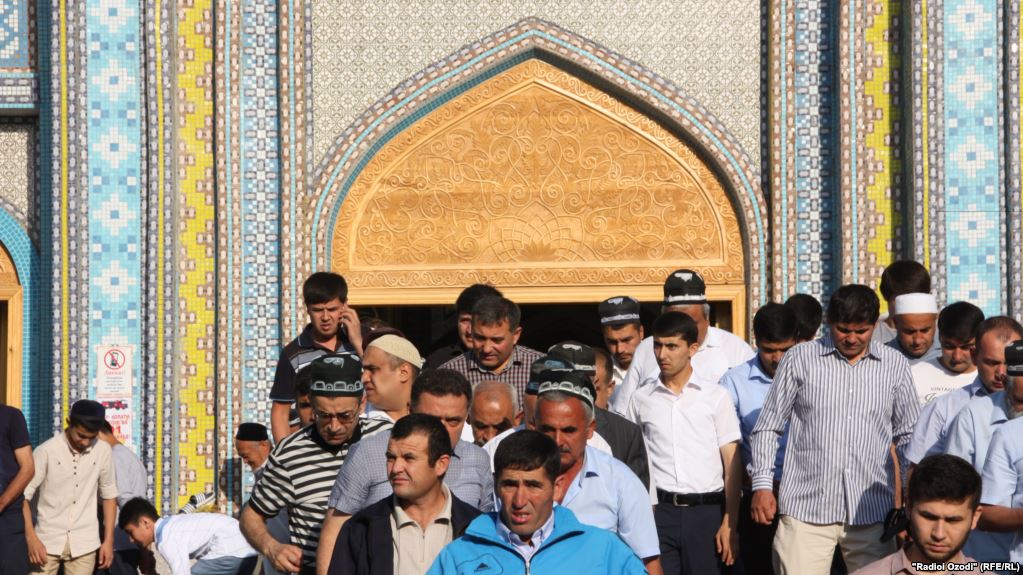
All religious institutions functioning in Tajikistan are now obligated to report their incomes and their income sources.
The amendment made to Article 19 of Tajikistan’s Law “On Freedom of Conscience and Religious Associations” (Law on Religion) took effect on January 22.
Under this amendment that was made to the law under the proposal of the government, “religious associations as well as mosques, churches and synagogues functioning in the country are obligated to report the sources of their incomes, property, use of funds and properties as well as wages of their employees and paid taxes.”
All religious institutions functioning in Tajikistan are now obligated to report their incomes and their income sources.
The amendment made to Article 19 of Tajikistan’s Law “On Freedom of Conscience and Religious Associations” (Law on Religion) took effect on January 22.
Under this amendment that was made to the law under the proposal of the government, “religious associations as well as mosques, churches and synagogues functioning in the country are obligated to report the sources of their incomes, property, use of funds and properties as well as wages of their employees and paid taxes.”
Tajikistan passed a new law on religion in 2009 and international organizations criticized it as “restrictive.” The law required all religious communities to reregister with the Committee for Religious Affairs (CRA).
Many mosques, some churches, and other non-Islamic places of worship were denied reregistration at that time.
The law on parental responsibility that took effect in August 2001 bans most children under the age of 18 from attending regular Friday Prayers in mosque.
Officials have said the law aims to prevent children from falling prey to Islamic radicalization.
Mosques are not considered a state agency in Tajikistan, but all official religious bodies are controlled and regulated by state bodies.
In early 2104, the Tajik authorities introduced uniform and dress code for the country's imams. The uniform consists of a grey satin shirt, trousers, a turban, and a long powder-blue robe highlighted by traditional white embroidery on the cuffs, lapels, and front trim.
In the same year, the government began issuing monthly salaries to mosque imams, depending on their position. The decision to provide the wages was reportedly made at the request of imam-khatibs.
Besides, the examination of religious knowledge of imam-khatibs has been conducted in Tajikistan over the past nine years.
Recent compulsory attestation, or examination of imam-khatibs (worship leaders of Friday mosques) by a commission comprising representatives of the CRA and the Shuroi Ulamo (Council of Ulama — an Islamic council that issues fatwas (religious rulings) and religious guidance to Islamic religious organizations) has reportedly seen dozens of imam-khatibs sacked for alleged insufficient knowledge of Islam.
The attestation of imam-khatibs to allow them to retain their positions began in late December and before the attestation there had been 265 imam-khatibs in Tajikistan; dozens of them had failed to meet the requirements of their positions. They were obliged to leave their posts.
An official source at the CRA says the attestation of 3,000 imams of mosques for daily prayers will start in the near future.
Some local experts consider that the attestation is a way to control politically outspoken religious figures.