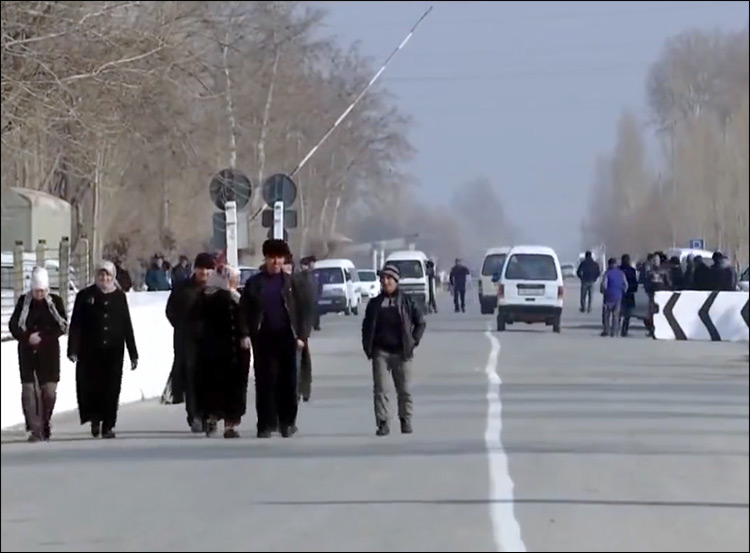
Ten border crossing points (BCPs) have reopened along the Tajik-Uzbek border after being closed for more than ten years.
Ten BCPs reopened along the mutual border of Uzbekistan and Tajikistan today, an official source at the Uzbek diplomatic mission in Dushanbe told Asia-Plus common Thursday afternoon.
According to him, the Uzbek government issued a decree on this subject on February 21.
The following BCPs officially resumed operations on March 1:
– BCP “Jarteppa” between Tajik Panjakent in the Sughd province and Uzbek Samarqand;
– BCPs “Qushkent” and “Uchturgan” between Tajik districts of Ghonchi and Zafarobod in the Sughd province and Uzbek Jizakh;
– BCPs “Khavastabad” and “Bekabad” between Tajik district of Spitamen in the Sughd province and Uzbek regions of Tashkent and Syrdarya;
– BCP “Pap” between Tajik district of Asht in the Sughd province and Uzbekistan’s Namangan region;
– BCP “Ravat” between Tajik district of Konibodom in the Sughd province and Uzbekistan’s Ferghana region;
– BCP “Gulbahor” between Tajik district of Shahritous in the Khatlon province and Uzbekistan’s Surkhandarya region.
Besides, the railway crossing point “Amuzang” connecting Uzbekistan’s Surkhandarya regions and the railway station “Khoshadi” in Tajikistan’s Khatlon province and the border post near the Jarteppa settlement in the Urgut district of Uzbekistan’s Samarqand region also reopened for proceeding today, the source added.
Meanwhile, “Abdarkhn-Patar” and “Qushtegrmon” border crossing points on the Uzbek-Tajik border reopened for proceeding last month.
Before that, only two BPCs having international status – “Dousti” in the Tursunzoda district (central Tajikistan) and “Fotehobod” in the Mastchoh district (Sughd province) operated twenty-four hours a day.
There are 16 border crossing points (BCPs) along Tajikistan’s common border with Uzbekistan; nine of them have an international status. Twelve BCPs are located in the northern Sughd province and the remaining four BCPs are located in the southern Khatlon province and Tursunzoda district (central Tajikistan).
Uzbekistan had sealed the border crossing points along its common border with Tajikistan unilaterally in the 1990s.
Dushanbe and Tashkent are currently discussing issues related to reopening all the border crossing points along the mutual border.
A number of agreements between Tajikistan and Uzbekistan were reached during a visit of Uzbek Prime Minister Abdulla Aripov to Dushanbe that took place on January 10.
Tajikistan and Uzbekistan, in particular, agreed to visa-free travel and other border-crossing measures. Tajik Prime Minister Qohir Rasoulzoda and his Uzbek counterpart, Abdulla Aripov, agreed to finalize and sign the new border protocols in the near future.
The new border regulations allow Tajik citizens to visit Uzbekistan and Uzbek citizens to visit Tajikistan without visas for up to 30 days.
The regulations also provide for the building of new checkpoints along the border and the opening of several bus links to connect the two nations' towns and cities.
The sides also reached an agreement regarding the disputed dam of the Soviet-era “Farhod” hydropower station along the border. Under the accord, the land on which the station stands will be Tajik property, while the station itself — including its equipment and infrastructure — will be owned by Uzbekistan.