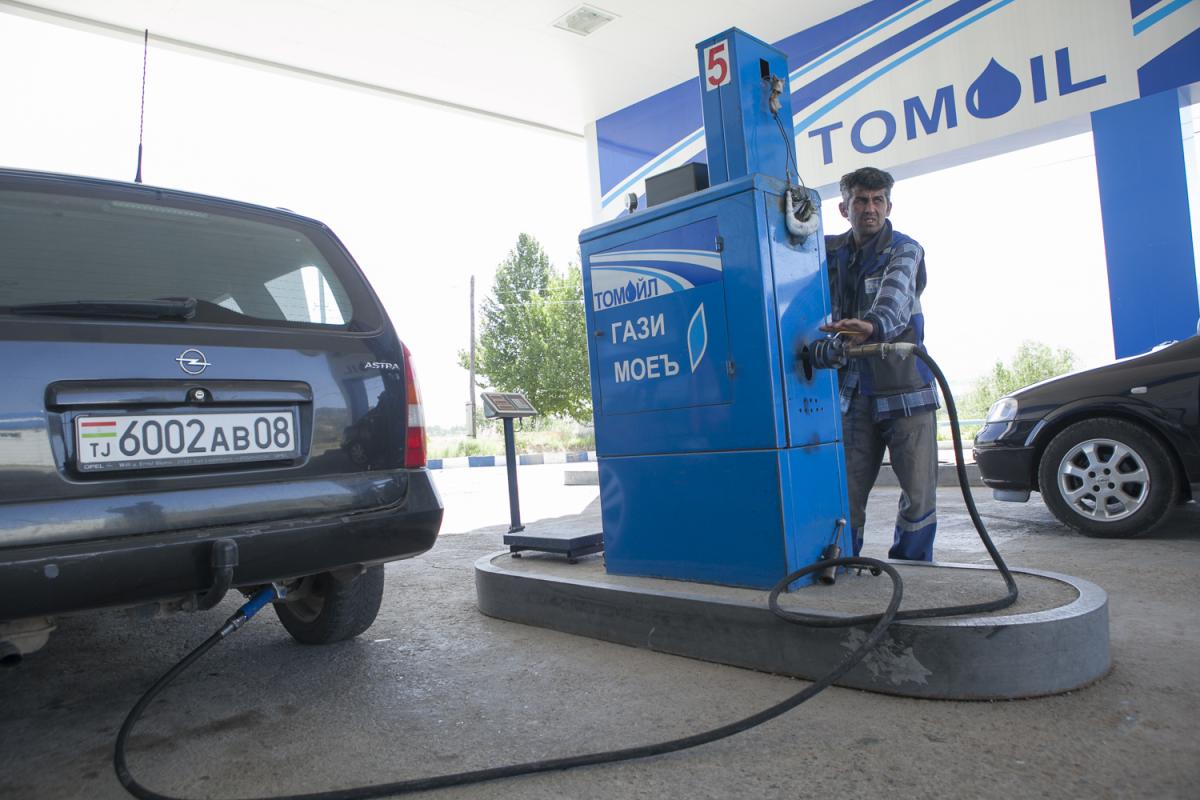
Prices for liquefied gas have risen dramatically in recent weeks. After the middle of June, prices for gas in Dushanbe leapt by more than one-third, from 3.40 somoni per liter to around 4.90 somoni in mid-July, EurasiaNet.org says noting that petrol has followed suit, jumping from around 6.40 somoni to 8 somoni per liter.
The impact has forced drivers to hike their own prices.
The impact has also been felt on travel between towns. Where a ride from Dushanbe to the country’s second city, Khujand, once cost around 80 somoni, now it is around 120 somoni. The rate of increase applies across the board.
According to official figures, around 85 percent of the 340 tons of liquefied gas imported for motorists annually comes from Kazakhstan. The rest is from Russia.
Following the trail of fuel supplies is intensely complicated, however, as the business is opaque and malfeasance is said to abound.
In writing about the regional rise in prices for liquefied gas, Argus, a publication that specializes in analyzing the global energy market, wrote in an emailed Russian-language bulletin dated June 20 that it had been caused by a slowdown of operations at the Kazakh-Chinese-run Zhanazhol gas processing plant near Aktobe in western Kazakhstan.
The price of gas at the Uzbek-Tajik border in June was recorded as rising by $140 per ton week-on-week, to $540, Argus reported in its bulletin without stating its source.
Those figures, which industry insiders have said may be set to grow further, are startling for a number of reasons.
The price at which bulk retailers of liquefied gas in Kazakhstan, where Tajik traders source much of their fuel, are allowed to sell their product on the internal market is set in law at regular intervals. The current level is 38,700 tenge ($113) per ton. When it comes to selling to international buyers, negotiation is the name of the game.
Lawmakers in Kazakhstan have worried that this dynamic has created a strong incentive to export to nearby countries. But under changes to the rules set to go in place in Kazakhstan in January 2019, the bulk sale price of liquefied gas will be allowed to float in line with market forces, reducing the incentive for export.
That could result in deficits and prices rising even further for consumers down the pike, in Tajikistan.
Even in the short term, the picture does not look reassuring.
A representative for a Tajikistan-based company dealing in the import and sale of hydrocarbon products told EurasiaNet.org on condition of anonymity that the Zhanazhol plant’s suspension of deliveries to Tajikistan began on June 1 and is expected to end on July 15.
“Considering this situation, other Kazakh companies have sharply increased the cost of their exported gas. That is why the price has risen so sharply,” the source said.
Russia should be a competitive alternative given that the two countries have a standing agreement on the tariff-free trade of energy products, but in practice this appears to have little effect.
“Only a couple of Tajik companies and [Russia’s state-controlled] Gazpromneft can take advantage of this agreement,” the sale trading company source said.
More upward pressure was put on retail liquefied gas prices by the rising cost of transportation. In April, Tajikistan’s national railway company increased the cost of carrying liquefied gas and petrol into the northern Sughd region by around one-third. This revenue-raising move in effect penalizes those using the most direct route for importing fuel from places like Kazakhstan and Russia.
Once the new fuel-prices play their way through the system, it will eventually lead to rises in the cost of basic staple goods, Alisher Safarov, an economist, told EurasiaNet.org.
“Prices for groceries will go up, because you need transport to carry them around, and the cost of that has gone up. Any changes in the end will hit the consumer,” he said.