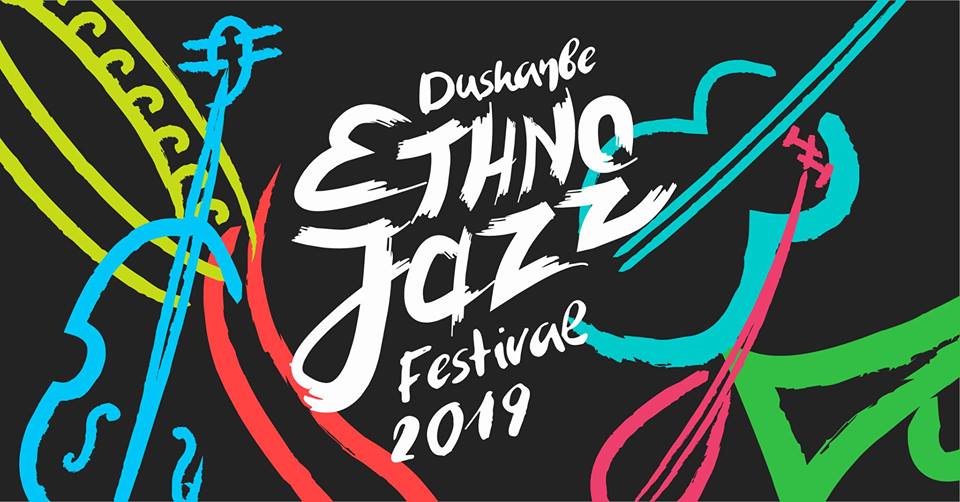
Dushanbe International Ethno-Jazz Festival opens its doors again

The Dushanbe Ethno-Jazz Festival, which traditionally offers a rare opportunity for an intense intercultural dialogue between Tajikistan and other countries, is kicking off tomorrow. As a continuation of this tradition, the festival welcomes guests from Switzerland, Germany, Austria, the Netherlands, France, Kazakhstan, Kyrgyzstan and Uzbekistan.   Tajikistan will be represented at the festival by Avesto, Silk […]

Asia-Plus

The Dushanbe Ethno-Jazz Festival, which traditionally offers a rare opportunity for an intense intercultural dialogue between Tajikistan and other countries, is kicking off tomorrow.

As a continuation of this tradition, the festival welcomes guests from Switzerland, Germany, Austria, the Netherlands, France, Kazakhstan, Kyrgyzstan and Uzbekistan.  

Tajikistan will be represented at the festival by Avesto, Silk Road and Navoi Ajam music groups.

Avesto, which has the status of one of the best music groups in Central Asia playing jazz fusion, will open the event

On April 27, Tajik quintet Silk Road will open the event.   

Initiated and funded mainly by Switzerland, the Ethno-Jazz Festival has become an established and anticipated music event for Tajik jazz fans since 2009.  

Ethno Jazz, also known as World Jazz, is a subgenre of jazz and world music, developed internationally in the 1950s and '60s and broadly characterized by a combination of traditional jazz and non-Western musical elements.  Though occasionally equaled to or considered the successor of world music, an independent meaning of ethno jazz emerged around 1990 through the commercial success of ethnic music via globalization, which especially observed a Western focus on Asian musical interpretations.  The origin of ethno jazz has widely been credited to John Coltrane.

Notable examples of ethno jazz include the emergence of jazz through New Orleanian and Cuban exchange, Afro-Cuban jazz of the 1940s and '50s, and the Arabic influence present in some American jazz from the 1950s and '60s.

Ethno Jazz was possible thanks to a phenomenon called “globalization,” which began in the 19th century with the end of the Industrial Revolution.  This brought technological development that helped connect cultures in faster and more efficient ways.  Jazz benefited from this by being able to travel around the globe as recordings and performances. 

Article translations:

Related Article

Оби зулол

Most Read

Join us on social media!

Recent Articles

Mudflows and dust storms expected in Tajikistan

Citizens are urged to protect themselves from dust.

Russia doubles temporary stay duration for truck drivers from CIS and Georgia

Tajik drivers will have their term increased from 90 to 180 days a year.

How a guide dog project could help people with visual impairments in Tajikistan

In Tajikistan, there is an enthusiast who can build such a school, but he urgently needs help, primarily financial.

Wildberries opened access to the platform for all sellers from Tajikistan

Now local brands, manufacturers, and individual entrepreneurs can enter the largest online platform and expand their sales market.

CMWP Uzbekistan: The boutique hotel market in Tajikistan shows the fastest growth in the region

Such hotels in the republic offer their guests a high level of comfort and convenience.

Emomali Rahmon signs decree on increasing salaries and paying bonuses to IT sector workers

The document provides for the creation of a new incentive system for specialists in the field of information technology.

Not advertising, but influence: what was discussed at IMPACT Creative Night and why businesses need meaning today

Today, audiences trust direct advertising less and less, which means brands have to compete not for attention, but for trust and a place in the agenda.

Russia extends the experiment on collecting biometrics from foreigners

The decision was justified by the necessity of gradually modernizing all border crossing points.