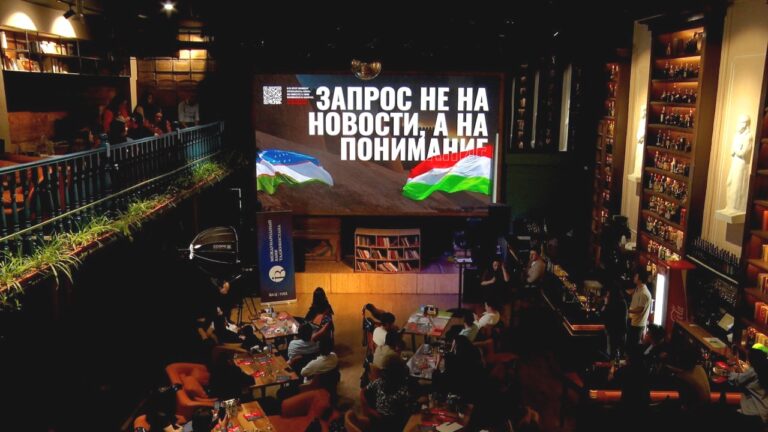
Fighting human trafficking in Tajikistan and the consolidation of the country’s victim-centered support system are the focus of an academic conference being held today at the Tajikistan National University (TNU) in Dushanbe. The conference is dedicated to the World Day against Trafficking in Persons commemorated annually on July 30.
The International Organization for Migration – UN Migration Agency (IOM) supports the TNU National Training Center on Fighting Human Trafficking and Tajikistan’s Inter-Ministerial Anti-Trafficking Committee in the organization of this conference.
According to the IOM Mission to Tajikistan, local think tanks, academia, civil society and government agencies are presenting their victim-centered efforts and experience, and discussing the use of new technologies in fighting this crime in Tajikistan. Other topics on the agenda include legal representation of victims during investigation and prosecution; full support packages for victims; prevention of re-victimization and stigma; the use of internet in preventing human trafficking and irregular migration; regional and global best practices; and Tajikistan’s international commitments.
“This is a discussion of vital importance. The cooperation between practitioners and the academia is essential for building effective approaches to fighting trafficking and assisting victims”, said Cristina Gheorghe Tranca, Chief of Mission, IOM Tajikistan.
Meanwhile, the IOM network of civil society partners in Tajikistan is marking the 2019 World Day against Trafficking in Persons today through a program of events engaging local youth and potential migrants.
Since the establishment in 2013 of the World Day against Trafficking in Persons, governments have been called to take action to protect victims and prosecute perpetrators. Billions of dollars are made by traffickers annually through the exploitation of thousands of victims for sexual and labor purposes. No country has proved immune to this form of modern slavery. The absolute majority of detected victims are women and girls trafficked for sexual exploitation. Women and girls account for every third of those trafficked for forced labor, with the other two thirds of forced labor victims being men and boys. Against this grim reality, the good news is that governments and the public are paying increased attention to the issue and that closer coordination between governments, the civil society and UN agencies has produced good results: increased victim identification and protection, more effective prevention and growing number of prosecution cases.
In 2019, IOM Tajikistan has conducted sustained awareness work through the [social] media and via educational events engaging target communities and society segments, especially Tajik youth. IOM’s efforts have also aimed to build capacity to detect victims and provide victim assistance, including by educating on the use by traffickers of new technologies in the recruitment of their victims and, conversely, the use of same new technologies to prevent trafficking and protect victims.
As a country of origin, transit and destination for human trafficking, and as a source country for migrant labor, Tajikistan has been challenged to work on its capacity to assist both Tajik and foreign nationals exploited for forced labor and sexual purposes. The 2018 human trafficking report upgraded Tajikistan to Tier 2 in recognition of the country’s sustained efforts to fight trafficking in persons.
Counter-trafficking is part of IOM’s core mandate. For close to two decades, IOM has assisted the Government of the Republic of Tajikistan to develop the legal framework and capacity to fight trafficking, provide protection to victims, and prosecute traffickers. In 2019, IOM Tajikistan has provided direct assistance to 17 victims of trafficking and prevented 8 other cases of potential trafficking, most of whom were male.