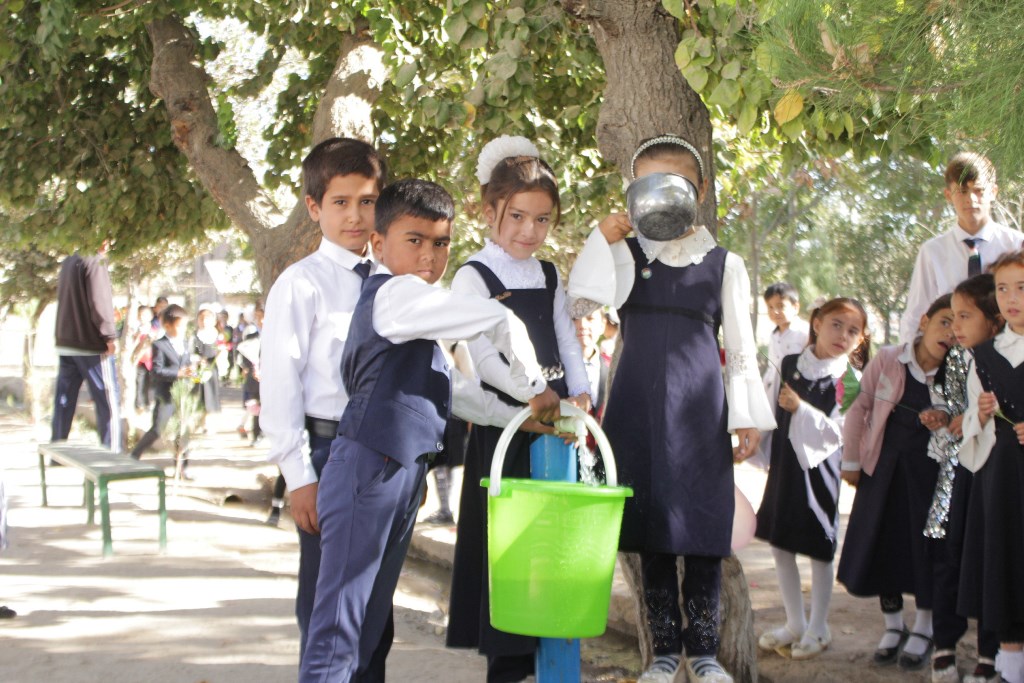
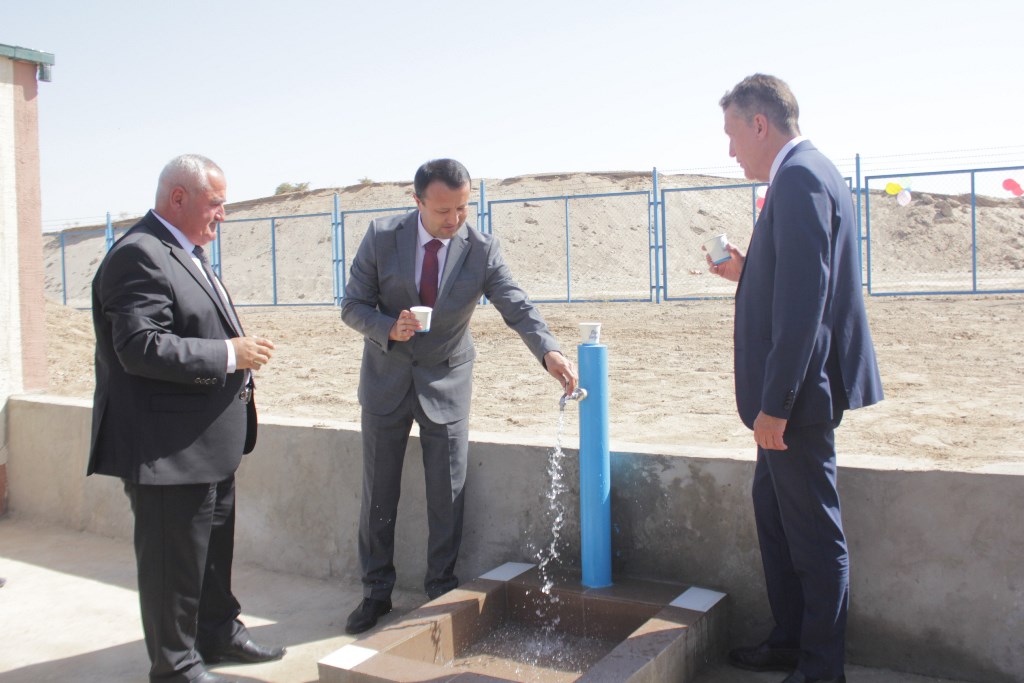
The United States Agency for International Development (USAID) and the Aga Khan Foundation’s (AKF) joint Thrive Tajikistan program has inaugurated two new drinking water supply systems and school latrines in two villages of Qubodiyon and Shahritous districts in Khatlon province, says press release issued by the Aga Khan Development Network (AKDN) Resident Office in Dushanbe on October 6.
The drinking water supply systems will provide clean, reliable water to households of over 10,000 people, and the new latrines will provide access to improved sanitation to over 1,500 schoolchildren and teachers.
The five-year (2018-2023) Thrive Tajikistan: Partnership for Socio-Economic Development program is just one of several partnerships between USAID and AKF that targets improving the quality of life for people in all 16 districts of Tajikistan along the country’s border with Afghanistan in Khatlon province and Gorno-Badakhshan Autonomous Region (GBAO).
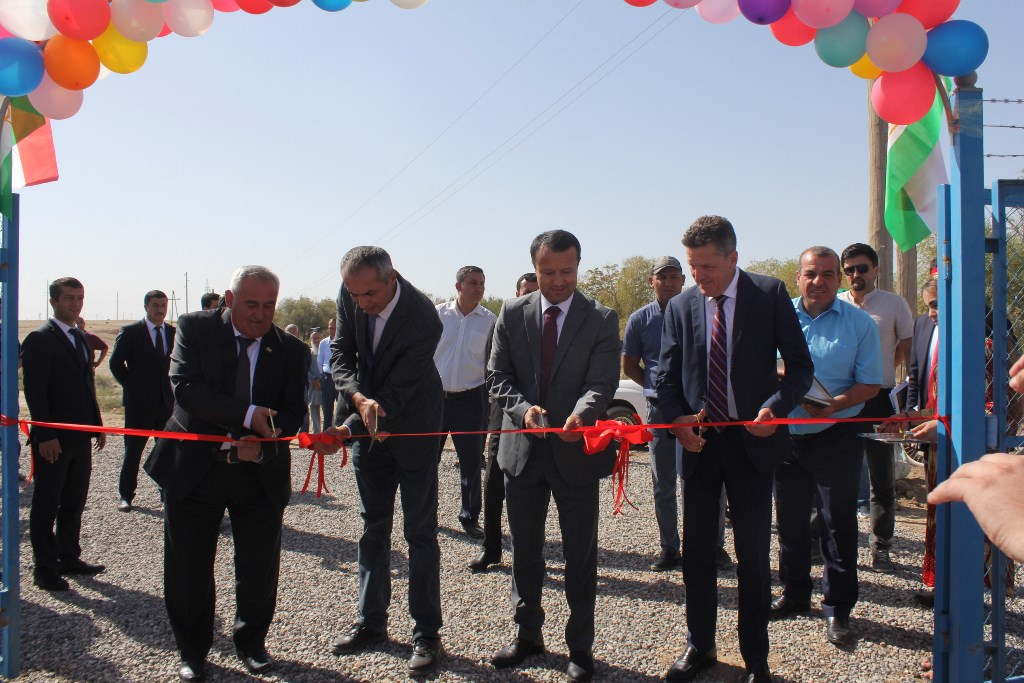
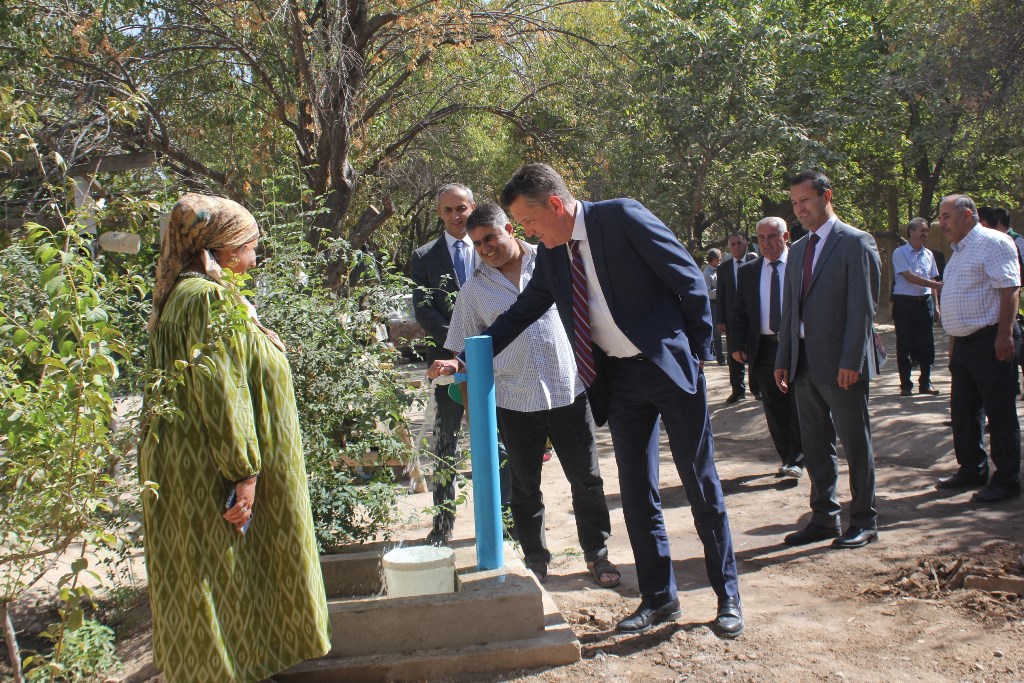
To-date, Thrive Tajikistan has reportedly constructed seven drinking water supply systems and seven school latrines in Farkhor, Hamadoni, Panj, Qubodiyon, Roshtqala, and Shahritous districts that provide 22,774 people with access to clean drinking water and improved sanitation and hygiene services to 4,924 people. Before the construction, these people were consuming unsafe water from shallow wells, rivers, and canals, often resulting in waterborne diseases. Overall, the program will construct 15 water supply systems that serve more than 41,000 people and 15 school latrines for more than 8,500 schoolchildren and teachers, according to the AKDN resident Office in Dushanbe.
To ensure all of these results are sustainable, USAID and AKF reportedly launched community outreach campaigns to discuss the importance of paying for services and to encourage better sanitation and hygiene practices. In response, households, as well as public and private institutions, have agreed to pay a modest water tariff, and the project has worked closely with the State Unitary Enterprise, Khojagii Manziliyu Komunali (Tajikistan’s state-owned agency responsible for basic municipal services), to improve their capacity to operate and maintain the systems.
USAID is the world’s premier international development agency and a catalytic actor driving development results. Since 1993, USAID has partnered with the Government of Tajikistan to strengthen good governance, boost economic growth, improve education, health, food security and bolster regional economic connectivity.
AKF partners with communities, nonprofits, businesses, governments, and local leaders to make long-term investments, build permanent institutions, and cultivate an active civil society. Its work focuses on improving quality of life and breaking the cycle of poverty. For 50 years, AKF has worked for the common good of all citizens, mainly in Asia and Africa, regardless of gender, origin or religion. The AKF is a member of the Aga Khan Development Network (AKDN), one of the world’s leading poverty solutions networks, established by His Highness the Aga Khan. The AKDN helps improve the quality of life for tens of millions of people annually in 30 countries. The AKDN’s integrated multi-sector approach to development is grounded in decades of experience, learning, and evaluation. For more information on how to support the AKF, visit www.akfusa.org.