The Dushanbe power supply network says it always informs the population about the planned repairs on the city power supply network in advance through the national TV channels.
Abduhalim Samizoda, the engineer-in-chief at the Dushanbe power supply network, says information about the planned repairs on the city’s power supply network is usually put on the creeping line.
According to him, they also officially inform the Dushanbe administration of the upcoming planned repairs on the city power supply network.
“Meanwhile, the unexpected repair works on the power transmission lines are carried out quickly without informing the population,” Samizoda added.
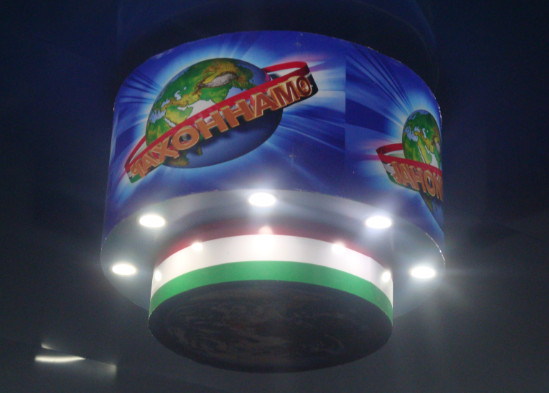
There are five national TV channels operating in Tajikistan: Shabakai Avval (Channel One); Safina; Jahonnamo (24-hour news TV channel); Bahoriston (children’s TV channel); and Varzish (Sports).
Recall, Barqi Tojik (Tajikistan’s national integrated power company) recently denied rumors that power rationing has been introduced in some districts of Dushanbe as absolutely unfounded.
Mahmadumar Asozoda, the first deputy director of Barqi Tojik, says power rationing has not officially hit Dushanbe.
According to him, a three-hour power outage that occurred in some areas of Dushanbe’s Sino district on November 27 resulted from a power line accident caused by snowfalls and cold weather.
As it had been reported earlier, electricity rationing was introduced in rural areas of Tajikistan on November 1.
Electricity rationing has not affected Dushanbe, regional administrative centers and large cities.
The power rationing has also not affected the majority of districts of the Gorno Badakhshan Autonomous Region (GBAO). In GBAO, Tajikistan’s only private power company, Pamir Energy Company (Pamir Energy), operates. This company is responsible for electricity deliveries in the region and the majority of districts in Gorno Badakhshan now have regular power supply.
Measures rationing electricity supplies are usually introduced in all regions except Dushanbe and seek to curb the country's rising electricity consumption. The rationing is introduced in October or November and lasts through March or April next year. The rationing results in the supply of daily electrical power being reduced to 12 or 10 hours. In addition to curbing rising consumption, the move also stems from a decline in the water level in the country's reservoirs powering the main hydroelectric power plants.