The National Bank of Tajikistan (NBT) that has published its official position on bitcoin for the first time considers that bitcoin is a risk tool that could be used for financing terrorism.
“Being based on experience of financial institutions, the National bank warns nationals of Tajikistan of risks related to use of bitcoins,” a written reply by Tajik central bank to Radio Liberty’s Tajik Service says.
According to the NBT, because of anonymity of many bitcoin transactions bitcoins can be used for carrying out queer transactions.
Bitcoin can undergo cyber-attacks or can be used for money laundering and terrorism financing, the NBT notes in its letter.
Meanwhile, the Financial Action Task Force (FATF), a Paris-based, intergovernmental body that develops policies to protect the global financial system against money laundering and terrorist financing, in 2015 released a report called Emerging Terrorist Financing Risks. There is a small section in the report about virtual currency as a tool for this financing, but the 48-page report says foreign terrorist groups are primarily using traditional methods such as private donations, self-funding and criminal activities to raise funds. It says new payment technologies pose an emerging vulnerability that may increase over time, but the prevalence of these technologies by terrorist groups is not clear at present, CNN reported on October 25, 2015.
Wall Street Journal reported on March 8, 2017 that since the beginning of 2016, law enforcement agencies including the FBI and Europol have begun to describe bitcoin as a terrorism financing tool due to its use case in the dark web. However, these law enforcement agencies were harshly criticized for misleading the public, as fiat money or cash, which serves the global financial ecosystem as the base monetary system, accounts for nearly 97% of all criminal activities due to its complete anonymity.
Analysts and supporters of bitcoin expressed their concerns over governments and law enforcement agencies’ attribution of bitcoin to criminal activities, mostly because bitcoin is not completely anonymous as anyone can track down the flow of transactions using the public blockchain. When a criminal tries to sell bitcoin in a regulated bitcoin exchange, with KYC and AML systems in place, government agencies will be able to unravel the identity of the bitcoin user with ease, according to the Wall Street Journal.
Bitcoin.com says a report from a British defense and security think tank, the Royal United Services Institute (RUSI), released in 2017, reveals that reports of terrorism financed through Bitcoin are greatly exaggerated.
RUSI consultant David Carlisle reportedly said that there is a lot of attention given to the possibility of bitcoin being used as a terrorist financing tool but “overreaction could stifle an important new financial technology”. He noted that there are very few instances where cryptocurrencies have been used for terrorism.
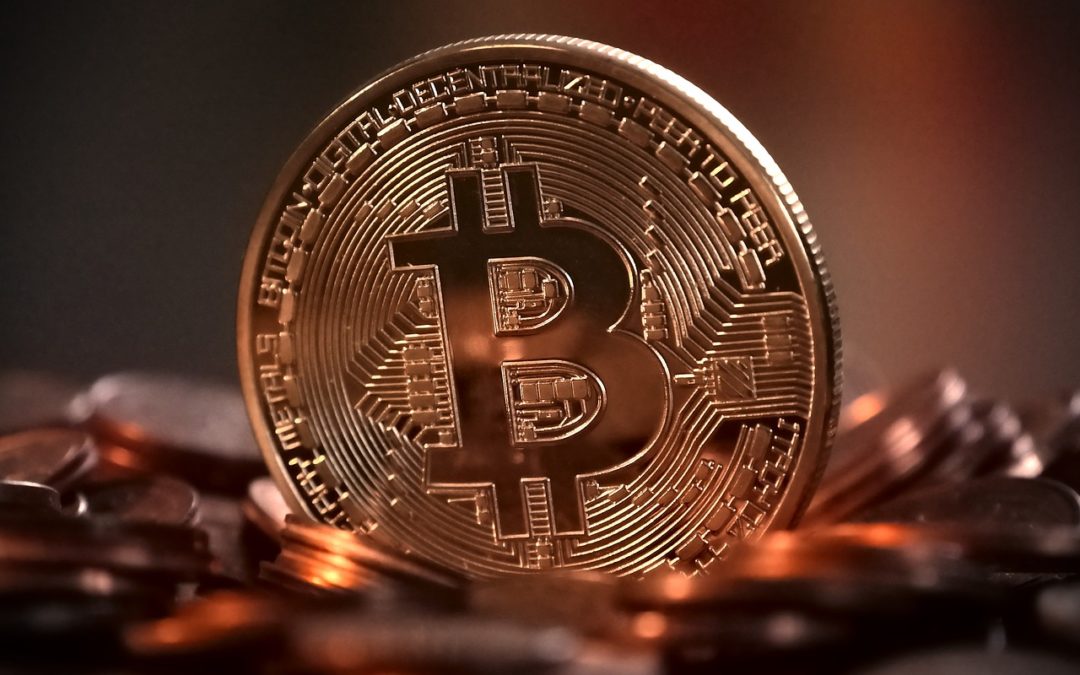
Bitcoin is a crypptocurrency and worldwide payment system. It is the first decentralized digital currency, as the system works without a central bank or single administrator. The network is peer-to-peer and transactions take place between users directly, without an intermediary. These transactions are verified by network nodes through the use of cryptography and recorded in a public distributed ledger called a blockchain. Bitcoin was invented by an unknown person or group of people under the name Satoshi Nakamoto and released as open-source software in 2009.
Bitcoins are created as a reward for a process known as mining. They can be exchanged for other currencies, products, and services. Research produced by the University of Cambridge estimates that in 2017, there are 2.9 to 5.8 million unique users using a cryptocurrency wallet, most of them using bitcoin.