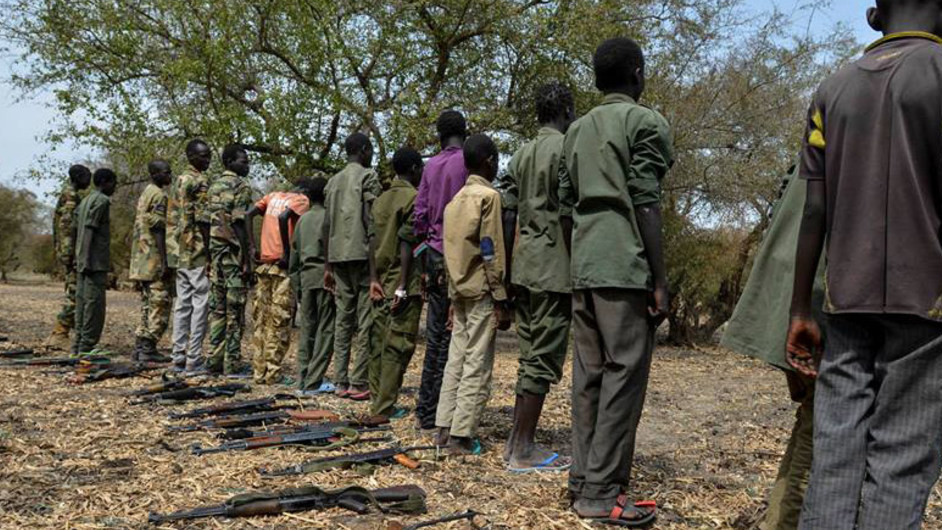
More than 12,000 children killed and maimed in conflict last year, says Un report

A new UN report has found that 2018 was the worst year on record for children caught up in armed conflict; the year saw the highest numbers killed or maimed since the United Nations began monitoring the violation, according to the UN News Center. In the 20 conflict situations monitored in the 2018 edition of […]

Asia-Plus

A new UN report has found that 2018 was the worst year on record for children caught up in armed conflict; the year saw the highest numbers killed or maimed since the United Nations began monitoring the violation, according to the UN News Center.

In the 20 conflict situations monitored in the 2018 edition of the Annual Report of the Secretary-General on Children and Armed Conflict, released on July 30, more than 12,000 children were killed or maimed that year.

Children continue to be used in combat, particularly in Somalia, Nigeria and Syria: some 7,000 have been drawn into frontline fighting roles around the world, during 2018.  They also continue to be abducted, to be used in hostilities or for sexual violence: more than half of the 2,500 reported cases were in Somalia.

Some 933 cases of sexual violence against boys and girls were reported, but this is believed to be an under-estimate, due to lack of access, stigma and fear of reprisals.

Attacks on schools and hospitals have decreased overall, but have intensified in some conflict situations, such as Afghanistan and Syria, which has seen the highest number of such attacks since the beginning of the conflict in the country.

Mali provides the most serious example of children being deprived of access to education, and the military use of schools: 827 schools in Mali closed at the end of December 2018, denying some 244,000 children access to education.

Rather than being seen as victims of recruitment, thousands of children around the world were detained for their actual or alleged association with armed groups in 2018: in Syria and Iraq, the majority of children deprived of their liberty are under the age of five.

The report calls on nations to work with the UN to help relocate foreign children and women actually or allegedly affiliated with extremist groups, with the best interests of the child as the primary consideration.

The number of children benefiting from release and reintegration support, however, rose in 2018 to 13,600 (up from 12,000 in 2017).  The report recommends increased resources and funding to meet the growing needs, as more children are separated from armed groups.

 

Join us on social media!

Article translations:

Related Article

Оби зулол
Оби зулол

Most Read

Акика Алиф

Recent Articles

In Tajikistan, a unique surgery was performed for the first time on a child with an extremely rare pathology

Tajik and Russian surgeons successfully performed the most complex reconstruction of the bladder and abdominal wall for a child with recurrent exstrophy.

The ministry of health states that hantavirus does not threaten Tajikistan

Cases of infection with this virus were detected on board the cruise liner Hondius near the Canary Islands.

Tajikistan lags behind other Central Asian countries in number of chain hotels – study

The Republic remains a niche market with a limited number of quality hotels.

Climate risks threaten food security in Central Asia – FAO

Land degradation reduces agricultural productivity. The loss of biodiversity weakens the ecosystems that farmers, livestock breeders, and rural communities depend on.

Potential or illusion? Why the world overlooks Tajikistan’s mineral wealth

The republic may indeed possess significant reserves of rare metals, but there is a catch...

The case of ousted Kyrgyz security boss classified and moves to court

The former head of the GKNB is charged with violent seizure of power and abuse of official position.

Trump states that Iran’s nuclear program is a higher priority than U.S. citizens’ economic issues

Fluctuations in energy prices led to record inflation in the United States in April, the highest in the past three years.

Foot-and-mouth disease, plague, and flu: Central Asia threatened by transboundary animal diseases

FAO urges Central Asian countries to strengthen coordination and epidemiological surveillance.

Tajikistan approves the second phase of the Electric Transport Development Program; $95 million will be allocated for its implementation.

At this stage, the authorities are focusing on charging infrastructure, services for electric vehicles, and the expansion of the electric bus fleet.

Tajikistan and Kazakhstan to sign roadmap for cooperation in the agrarian sector

The parties are interested in expanding investment cooperation and establishing joint ventures.